Buyer Knowledge Base
Frequently Asked Questions for Argentine Orthopedic Buyers
Addressing key technical, regulatory, and commercial inquiries from medical device importers in Argentina.
Q1: How does Trauhui Medical assist with ANMAT registration in Argentina?
We provide full technical documentation compliant with ANMAT Disposición 3266/2013 requirements. This includes certified ISO 13485 documentation, CE certificates, detailed biocompatibility reports (ISO 10993), raw material analysis (ASTM F136 / ISO 5832-3), dynamic fatigue test data (ASTM F2077), and step-by-step technical descriptions ready for submission by your local regulatory agent.
Q2: What are the typical shipping options and transit times to Argentina?
Orders are dispatched directly from our Changzhou facility. Air freight orders delivered to Ezeiza International Airport (EZE) in Buenos Aires typically take 5–8 days transit time. Sea freight shipments to the Port of Buenos Aires take approximately 35–45 days. We work with leading international freight forwarders experienced in medical cold-chain and sterile goods transport.
Q3: Can Trauhui Medical manufacture under our private brand label?
Yes. We offer comprehensive OEM/ODM services including laser-marking of your company logo and catalog numbers on implants and surgical instruments, custom-designed sterilization trays, user manuals in Spanish, and customized box packaging that complies with Argentine labeling regulations.
Q4: Are surgical instruments supplied along with the implants?
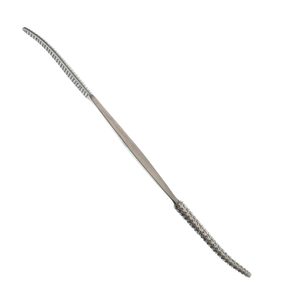
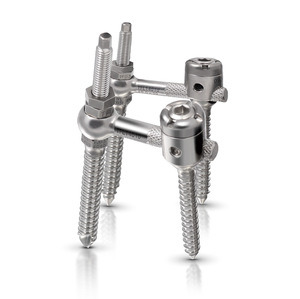
Absolutely. We provide dedicated, complete surgical instrument sets for all our spine, trauma, and CMF implant systems. These toolkits are crafted from high-grade stainless steel and anodized aluminum, designed to endure rigorous, repeated autoclave cycles in hospital central sterile supply departments (CSSD).
Q5: What is the Minimum Order Quantity (MOQ) for new Argentine importers?
We offer flexible MOQ terms for initial trial orders to support your market entry and ANMAT registration process. Standard system trial orders can be customized across multiple sizes of plates, screws, or cages to assemble balanced inventory sets without requiring huge upfront capital commitment.
Q6: What quality standards and raw materials are used in your implants?
We use exclusively certified medical-grade raw materials sourced from globally recognized suppliers, such as Titanium Alloy Ti-6Al-4V ELI (ASTM F136 / ISO 5832-3) and Implant-Grade Stainless Steel (ASTM F138). Manufacturing operations adhere strictly to ISO 13485 QMS guidelines, featuring sub-micron CNC tolerances and Class 100,000 cleanroom packaging.
Q7: How do your product prices compare with European or American brands?
By leveraging the efficiency of the Changzhou orthopedic manufacturing ecosystem and high-volume automated 5-axis Swiss CNC machining, our landed prices are typically 40% to 60% lower than traditional Western brands, while delivering equivalent or superior mechanical performance and clinical outcome reliability.
Q8: Do you offer training or clinical technical support for our sales force?
Yes. We provide complete technical sales enablement packages including 3D surgical technique video guides, detailed clinical manuals, surgical step-by-step wall charts, and direct virtual consultations between our engineering team and your technical specialists or surgeon partners in Argentina.