Certified Class II Orthopedic Systems for Kenya
Precision-engineered spinal, trauma, CMF, and veterinary surgical implants compliant with international ISO 13485, CE, and FDA standards.
1. Regulatory Framework & Procurement Landscape for Class II Medical Devices in Kenya
The healthcare system in Kenya is undergoing a structural transition driven by the national expansion of Universal Health Coverage (UHC), managed under the Ministry of Health (MoH) and executed via the Social Health Insurance Fund (SHIF, formerly NHIF). Within this evolving paradigm, trauma and orthopedic surgery represent critical clinical specialties. Kenya faces a significant burden of orthopedic trauma, largely stemming from road traffic accidents (notably involving commercial two-wheeler boda-bodas), industrial mishaps, and an aging population prone to degenerative spine and joint conditions. Consequently, public referral hospitals, county-level healthcare facilities, and private medical networks are demanding robust, internationally compliant, and cost-effective orthopedic hardware.
Under the regulatory authority of the Pharmacy and Poisons Board (PPB) of Kenya, orthopedic implants—including pedicle screws, intramedullary nails, locking compression plates, and cannulated headless screws—are categorized as Class II (Moderate-to-High Risk) or Class III medical devices. Importers, surgical distributors, and hospital procurement units in Nairobi, Mombasa, Kisumu, and Eldoret must navigate strict pre-market approval and import guidelines to ensure patient safety and clinical efficacy.
Key Compliance Protocols for Kenyan Importers:
- PPB Product Notification & Dossier Registration: All Class II medical devices must be backed by a complete Technical Documentation File (TDF), including ISO 13485 certification, CE Mark (under EU MDR 2017/745 or MDD 93/42/EEC), or US FDA 510(k) clearances.
- Pre-Export Verification of Conformity (PVoC): Administered by the Kenya Bureau of Standards (KEBS), all bulk shipments of surgical implants originating from overseas manufacturing hubs (such as China) must obtain a Certificate of Conformity (CoC) issued by authorized inspection agencies (e.g., SGS, Intertek, Cotecna) prior to port arrival in Mombasa or JKIA Nairobi.
- Biocompatibility & Material Traceability: Metallurgical certification validating the use of implant-grade alloys—specifically Ti-6Al-4V ELI (ASTM F136) and 316L Surgical Stainless Steel (ASTM F138)—is mandatory to prevent corrosion, wear debris toxicity, or early mechanical failure.
For Chinese manufacturers and exporters, establishing direct OEM/ODM partnerships with Kenyan medical suppliers requires not only technical precision but also a thorough understanding of the local healthcare delivery structure—from Level 4 County Hospitals requiring standard trauma sets to Level 6 National Referral Centers demanding advanced spinal deformity instrumentation.
2. Localized Clinical Application Scenarios Across Kenyan Healthcare Tiers
To optimize hospital supply chains, foreign exporters and local medical distributors must align product specifications with specific clinical environments across East Africa. Orthopedic procedures in Kenya are performed across four distinct institutional tiers, each characterized by unique surgical requirements, budgetary constraints, and infrastructure capabilities.
A. Level 6 National Referral & Teaching Hospitals (e.g., Kenyatta National Hospital, Moi Teaching & Referral Hospital)
These tertiary academic centers handle complex polytrauma, spinal deformities (such as scoliosis and Pott's disease / spinal tuberculosis), and oncological reconstructions. Surgeons operating in these facilities require advanced, high-precision surgical systems:
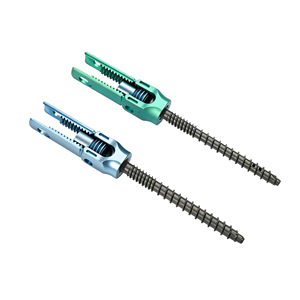
- Minimally Invasive Spinal Surgery (MISS): Percutaneous titanium alloy pedicle screw systems allow percutaneous fixation, reducing intraoperative blood loss, tissue trauma, and length of stay—a crucial benefit in high-volume public hospitals facing bed-capacity constraints.
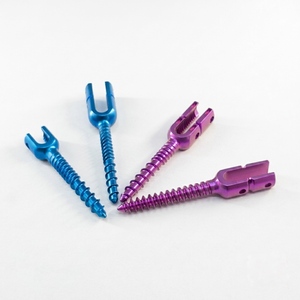
- Monoaxial & Polyaxial Pedicle Screws: Anodized 6.0mm reduction screws and variable-angle spinal rods enable three-dimensional deformity correction and stabilization in lumbar and thoracic spine fracture-dislocations.
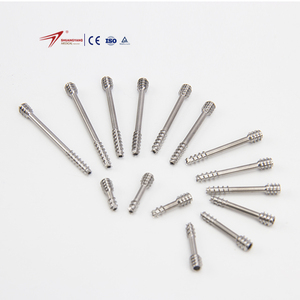
- Cannulated Herbert Screws: Headless titanium compression screws are widely utilized for scaphoid fractures, femoral head osteonecrosis, and intra-articular osteochondral fixation, facilitating early joint mobilization.
B. Level 4 & 5 County Referral Hospitals (e.g., Nakuru, Machakos, Kiambu, Mombasa County Hospitals)
County hospitals manage the primary burden of emergency orthopedic trauma resulting from regional highway collisions. These facilities prioritize mechanical durability, surgical versatility, and rapid instrument turnaround.
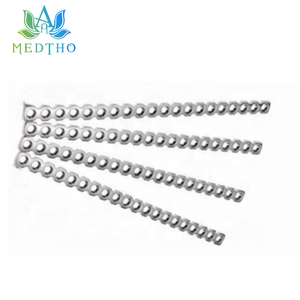
- Variable Angle Locking Compression Plates (LCP): Anatomic locking plates for distal femur, proximal tibia, and humeral shaft fractures allow multi-planar screw trajectory, providing stable fixation in osteoporotic or severely comminuted bone.
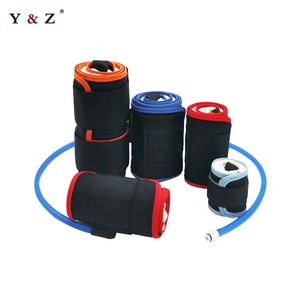
- Pneumatic Tourniquet Systems: Electricity-powered and reusable ABS pneumatic tourniquet cuffs are vital theater accessories. They create a bloodless surgical field during upper and lower limb open reductions, dramatically improving intraoperative visibility and reducing operative time.
C. Private Healthcare Networks & Specialist Surgical Centers (e.g., Aga Khan University Hospital, MP Shah, Nairobi Hospital)
Kenya's private medical sector caters to insured domestic patients, expatriates, and regional medical tourists from neighboring East African Community (EAC) countries such as Uganda, South Sudan, and Somalia. These institutions demand cutting-edge technology including motion-preserving cervical disc replacements, 3D-printed porous titanium interbody fusion cages (ACDF, TLIF, XLIF), and custom PEEK implants manufactured under strict ISO 13485 conditions.
D. Veterinary Clinics & Wildlife Conservation Units (Nairobi, Naivasha, Laikipia)
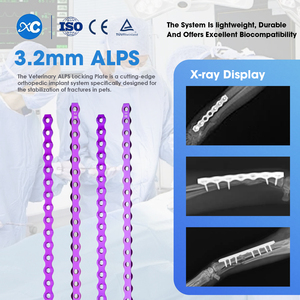
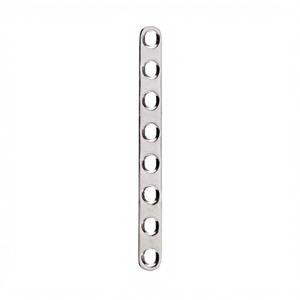
Kenya's veterinary market is expanding rapidly, encompassing small-animal clinical practices in urban centers as well as wildlife conservation and equine surgical facilities. Implants such as the 3.2mm ALPS Titanium Trauma Reconstruction Plate and straight stainless steel/titanium reconstruction plates (1.5mm to 3.5mm) are heavily utilized for canine fracture repair, feline pelvic reconstruction, and osteotomy procedures.
Advanced Manufacturing Engineering & Material Quality
Surgical success and implant longevity depend directly on the metallurgical integrity and precision machining of Class II medical devices. Leading OEM factories in Changzhou, China deploy state-of-the-art manufacturing technologies to exceed global standards.
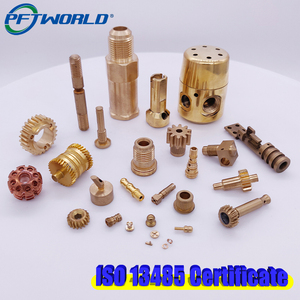
Utilizing high-precision DMG MORI and Citizen Swiss-type lathes to achieve sub-micron tolerances (±0.005mm) on complex thread profiles for pedicle screws and cannulated Herbert screws.
Type II electrochemical anodization forms a dense, stable oxide layer on Ti-6Al-4V ELI surfaces, improving fatigue resistance, eliminating fretting corrosion, and color-coding screw diameters for rapid intraoperative identification.
Class 10,000 (ISO Class 7) controlled cleanrooms ensure pristine packaging of sterile-ready implants, supporting double-sterile blister packaging for direct surgical field delivery.
3. Strategic Growth Trends in Kenya’s Orthopedic Device Sector
Understanding emerging trade dynamics allows medical device distributors and factory exporters to position themselves strategically in Kenya and the broader East African Community (EAC).
Trend 1: Material Transition from Stainless Steel to Titanium Alloy
Historically, stainless steel (316L) dominated the Kenyan public hospital market due to low unit acquisition costs. However, clinical data from major Kenyan teaching hospitals indicates a strong shift toward Titanium Alloy (Ti-6Al-4V) implants. Titanium's lower modulus of elasticity (closer to human cortical bone) minimizes stress shielding, drastically lowers the risk of implant failure, and is MRI-compatible. Public tender criteria in Kenya are increasingly awarding extra technical points to titanium plate and screw systems.
Trend 2: Demand for Turnkey Surgical Instrument Loaner Sets
Kenyan orthopedic surgeons frequently work across multiple hospitals. Hospital procurement teams favor manufacturers that supply complete, color-coded, reusable instrument sets packed in anodized aluminum sterilization trays. Providing dedicated taps, depth gauges, benders, and drill bits alongside implant inventory ensures seamless adoption by theater staff.
Trend 3: Decentralization of Surgical Services to County Level
Under Kenya's devolved governance model, 47 County Governments are upgrading their Level 4 and Level 5 hospitals with dedicated orthopedic theaters. This decentralization has created widespread demand for reliable, mid-tier orthopedic manufacturers who can guarantee consistent supply, short lead times, and comprehensive technical documentation.
Trend 4: Private-Label OEM/ODM Collaboration
Established Kenyan medical distributors are increasingly transitioning from simple spot-buying to long-term OEM contracts with Chinese factories. By private-labeling ISO 13485 and CE certified trauma and spine plates under their own local brand names, Kenyan distributors build sustainable market equity while keeping landed procurement costs manageable.
4. Enterprise Manufacturing Advantages: Why Partner with Trauhui Medical
Founded in 2009 in Changzhou, Jiangsu Province—known worldwide as China's premier hub for medical device innovation—Trauhui Medical Co., Ltd. has established itself as an authoritative manufacturer and global exporter of high-grade orthopedic implant systems and precision surgical instruments.
With an overall capital investment exceeding RMB 200 million, Trauhui Medical operates a state-of-the-art facility spanning over 30,000 square meters. Our infrastructure houses more than 30 dedicated production lines and over 150 sets of advanced CNC machining and inspection equipment imported from Germany, Switzerland, and Japan. Our annual production capacity exceeds 350,000 pieces, ensuring robust support for large-scale hospital tenders and bulk commercial orders across Africa.
Core Strengths of Our Manufacturing & Supply Chain Infrastructure:
- Comprehensive Quality Management System: Operating strictly under an ISO 13485 QMS, our manufacturing processes are certified by internationally recognized notified bodies. Products hold CE certifications and FDA 510(k) clearances, streamlining regulatory approval with Kenya's PPB.
- End-to-End In-House R&D: Supported by a senior multidisciplinary R&D team of over 30 engineers, Trauhui Medical continuously advances product design—from 3D-printed porous titanium cages to complex telescopic corpectomy and percutaneous spine systems.
- Proven African Export Track Record: Having exported to more than 30 countries across Africa, Latin America, Southeast Asia, and Europe, our international trade division understands the exact documentation, pre-shipment inspection (PVoC), and logistical requirements of East African ports.
- Short Lead Times & Large Stock Buffer: We maintain extensive inventory buffers for standard trauma plates, pedicle screws, intramedullary nails, and veterinary reconstruction sets, enabling standard order dispatch within 15 days.
- Customized OEM/ODM Private Labeling: From engineering drawings and rapid prototyping to custom packaging artwork and laser marking, we offer complete turn-key manufacturing support for private-label brand owners.
5. Frequently Asked Questions (FAQ) for Kenyan Procurement Managers & Importers
1. What regulatory documentation does Trauhui Medical provide for PPB registration in Kenya?
We provide a complete Technical Documentation File (TDF) required by the Pharmacy and Poisons Board (PPB) of Kenya. This includes copies of our ISO 13485 certificate, CE Mark certificate, FDA 510(k) documentation, raw material mill certificates (ASTM F136 Titanium / ASTM F138 Stainless Steel), biocompatibility test reports (ISO 10993 series), biomechanical static/dynamic fatigue test reports (ASTM F2193 / ASTM F1717), and detailed Instructions for Use (IFU).
2. How are Pre-Export Verification of Conformity (PVoC) inspections handled for KEBS clearance?
Before shipment dispatch from China, we coordinate directly with KEBS-approved inspection partners such as SGS, Intertek, or Cotecna. We prepare physical goods for factory inspection, lab testing verification, and container sealing to ensure a Certificate of Conformity (CoC) is issued immediately, allowing smooth customs release at Kilindini Port (MOMBASA) or JKIA Airport (NAIROBI).
3. Are implants shipped sterile or non-sterile, and what are the packaging specifications?
We offer both options depending on client preference: (1) Sterile-packaged implants sealed in double Tyvek-blister packaging subjected to Gamma-ray or ETO sterilization with a 5-year shelf-life, and (2) Non-sterile implants packed in cleanroom protective poly-bags intended for hospital autoclave sterilization inside reusable surgical trays.
4. What is the minimum order quantity (MOQ) and delivery timeline to Nairobi?
For standard inventory items, we offer flexible MOQs suitable for distributor trials. Standard catalog items ship within 10 to 15 days following payment receipt. Air freight to JKIA Nairobi typically takes 3 to 5 transit days, while sea freight to Mombasa Port takes approximately 22 to 28 days depending on shipping lines.
5. Can Trauhui Medical supply surgical instrument sets on a loaner or purchase basis?
Yes. We supply matching dedicated surgical instrument sets housed in hard-anodized, autoclavable aluminum boxes. For key long-term distributors, we provide flexible instrument kit support to ensure surgical teams have complete access to precise reamers, benders, screwdrivers, and trial implants.
6. What options are available for OEM private labeling for Kenyan medical device companies?
We provide comprehensive OEM/ODM services. We can laser-etch your company name, brand logo, part numbers, and batch lot numbers directly onto implants and instruments. Additionally, we assist in designing custom sterile box packaging, barcodes, and localized IFUs complying with Kenyan labeling laws.
7. How does Trauhui Medical ensure material purity and prevent metal fatigue failures?
All raw materials are sourced exclusively from certified medical-grade titanium and stainless steel suppliers (with full chemical composition and tensile test certificates). Every batch undergoes ultrasonic flaw detection, optical spectrum analysis, CMM dimensional measurement, and mechanical fatigue testing under ISO 13485 protocol prior to machining.
8. What post-market surveillance (PMS) and technical support is provided to local partners?
We maintain a dedicated regulatory and technical support team that provides online surgeon training modules, surgical technique manuals (STGs), video guides, and rapid customer feedback handling. We actively participate in post-market surveillance to support our local Kenyan partner's compliance obligations with the PPB.