Featured Orthopedic Implant & Trauma Fixation Systems
Certified medical device portfolio manufactured under strict ISO 13485 QMS and CE/FDA compliance standards, supplying hospital systems, trauma units, and surgical distributors globally.
San Francisco Orthopedic Trauma Market & Clinical Supply Dynamics
An analysis of upper-extremity surgical demand, healthcare delivery frameworks, and procurement efficiency requirements across Northern California trauma networks.
Bay Area Level I-III Trauma Demographics
San Francisco represents one of North America's most dynamic orthopedic care markets. Anchored by major health systems—including Zuckerberg San Francisco General Hospital (ZSFG Level I Trauma Center), UCSF Health, Sutter Health CPMC, Kaiser Permanente, and Stanford Health Care—the region exhibits high demand for advanced trauma fixation. Fractures of the distal radius account for over 18% of all adult fractures presenting in Bay Area emergency departments, driven by high active-lifestyle participation (trail cycling, action sports, urban micro-mobility) alongside an aging population requiring rigid osteosynthesis for osteoporotic bone fractures.
ASC Cost-Efficiency & OR Turnover Demands
Ambulatory Surgery Centers (ASCs) throughout San Francisco and the wider Bay Area—such as the Presidio Surgery Center and Embarcadero Surgery Center—are increasingly handling outpatient distal radius ORIF (Open Reduction Internal Fixation) procedures. ASC operating models demand ultra-reliable implant-to-tray completeness, zero screw-thread stripping, and low-profile volar plate designs that eliminate post-operative flexor tendon complications, preventing re-admission costs while maximizing surgical room throughput.
Supply Chain Resilience & Port Logistics
Medical procurement teams in Northern California face unique supply chain pressures, requiring direct factory partnerships that guarantee batch-to-batch consistency, full MTR (Material Test Report) traceability, and rapid air/ocean freight delivery routes through San Francisco International Airport (SFO) and the Port of Oakland. Direct OEM supplier integration lowers hospital landed costs while providing custom tray configuration options for regional distributor networks.
Clinical Sourcing Insight: In the San Francisco market, healthcare procurement officers and Value Analysis Committees (VAC) prioritize distal radius volar plate suppliers capable of delivering Ti-6Al-4V ELI titanium anatomical plates with variable-angle locking capabilities. Achieving low profile thickness (<1.6mm distal lip) while maintaining high mechanical fatigue limits is critical to preventing flexor pollicis longus (FPL) tendon attrition in active Bay Area patient populations.
Biomechanical Architecture & Volar Plate Metallurgy
Engineered to balance anatomical soffit alignment, rigid intra-articular fragment fixation, and tendon preservation.
Anatomical Watershed Line Geometry
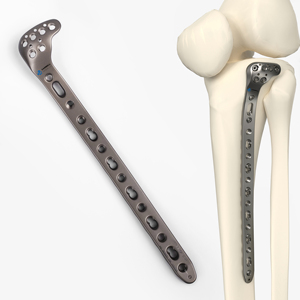
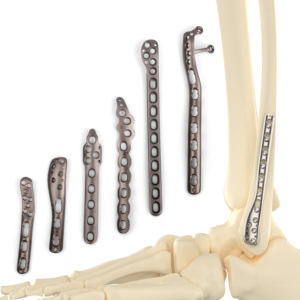
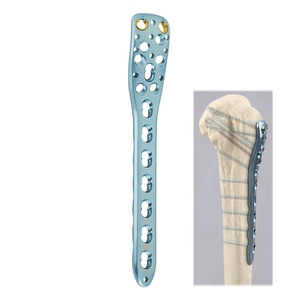
The distal volar radius exhibits a distinct anatomical boundary known as the watershed line. Plates positioned distal to this margin carry a significantly elevated risk of flexor tendon irritation or rupture. Our distal radius volar plate systems are CNC-milled with a tapered distal lip and a transverse anatomical radius contour that rests proximal to the watershed line while providing complete subchondral raft support for the lunate and scaphoid facets.
Ti-6Al-4V ELI Alloy Metallurgy
Manufactured exclusively from Titanium Grade 5 ELI (Extra Low Interstitial - ASTM F136), our volar locking plates deliver superior fatigue strength compared to standard 316L stainless steel (ASTM F138). With a modulus of elasticity (~110 GPa) significantly closer to native cortical bone (~18 GPa) than stainless steel (~200 GPa), titanium alloy minimizes stress shielding, accelerating secondary callus formation and bone healing under active load conditions.
Polyaxial Variable-Angle Locking Threads
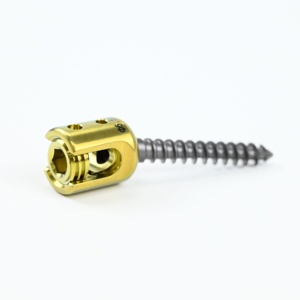
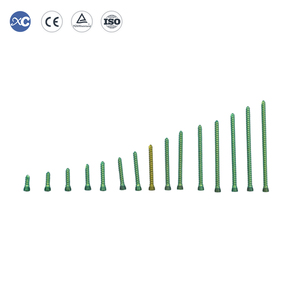
Complex intra-articular distal radius fractures (AO/OTA Type C2/C3) require tailored screw trajectories to capture small radial styloid or dorsomedial fragments. Our polyaxial locking mechanism allows a 30-degree total cone of variable angle screw insertion (±15° off-axis angle). Machined thread geometry inside the plate holes cold-welds with the 2.4mm / 2.7mm locking screw heads, ensuring fixed-angle stability without risk of cross-threading or back-out.
Technical Specifications & Biomechanical Benchmarks
Quantitative evaluation comparing Trauhui Medical / CANWELL Volar Locking Systems against general trauma industry standards.
| Mechanical & Design Parameter | Trauhui / CANWELL Distal Radius System | Conventional Stainless Steel Plates | Clinical Impact & Benefit |
|---|---|---|---|
| Raw Material Grade | Titanium Ti-6Al-4V ELI (ASTM F136) | 316L Stainless Steel (ASTM F138) | Higher yield strength, superior biocompatibility, MRI artifact reduction. |
| Distal Lip Profile Thickness | 1.4 mm – 1.6 mm (Ultra Low-Profile) | 2.0 mm – 2.4 mm (High-Profile) | Dramatically lowers rate of soft-tissue friction & FPL tendon rupture. |
| Screw Trajectory Freedom | Polyaxial Variable-Angle (±15° Cone) | Fixed Uni-axial Only (0° Offset) | Enables precise subchondral raft screw placement in complex intra-articular fractures. |
| Distal Screw Diameters | 2.4 mm / 2.7 mm Locking & Non-locking | 2.7 mm / 3.5 mm Non-locking | Optimized for small intra-articular fragment fixation without splitting bone. |
| Surface Modification | Type II Anodization + Micro-polishing | Standard Passivation | Increases fatigue life by 25% and reduces soft-tissue adhesion. |
| Shaft Length Options | 3, 5, 7, 9, 11-hole Standard & Extended Shafts | 3, 5, 7-hole Standard Only | Accommodates diaphyseal extension fractures into the radial shaft seamlessly. |
Trauhui Medical Manufacturing Infrastructure & Quality Systems
Vertical integration, advanced CNC machining technology, and rigorous quality assurance supporting global orthopedic distribution.
30,000 m² Advanced Production Hub
Located in Changzhou's high-tech zone—the center of China's medical device engineering cluster—our modern facility houses over 150 sets of international-grade precision machining equipment. Utilizing DMG MORI 5-axis Swiss-type automatic lathes and high-speed CNC centers, we achieve sub-micron tolerances for complex orthopedic contours and bone plate thread geometries.
ISO 13485, CE & FDA Quality Auditing
Quality management at Trauhui Medical operates under strict ISO 13485:2016 standards. Every manufacturing batch undergoes 100% Coordinate Measuring Machine (CMM) optical inspection, mechanical static/dynamic fatigue testing under ASTM F382 standards, and cleanroom bio-burden monitoring before release. Technical documentation and Device Master Files (DMF) are maintained to support registration with the US FDA and global regulatory authorities.
Custom OEM / ODM & Private-Label Services
Backing global healthcare brands and regional US distributors, our dedicated R&D engineering team provides end-to-end contract manufacturing. From CAD design modifications, prototype 3D printing, and biomechanical validation to custom tray laser-marking and sterile blister packaging, we take OEM projects from drawing board to commercial launch smoothly.
OEM / ODM Sourcing & Lead Time Framework
Transparent production milestones for San Francisco and US-based orthopedic brand owners and hospital group purchasers.
| Project Phase | Engineering & Operational Milestones | Standard Turnaround | Quality & Regulatory Deliverables |
|---|---|---|---|
| 1. Conceptual Design & CAD | Anatomical modeling, plate geometry customization, finite element analysis (FEA). | 3 – 5 Days | FEA Stress Distribution Reports, 3D CAD step files. |
| 2. Rapid Prototyping | 5-axis CNC machining of functional metal prototypes. | 7 – 10 Days | Dimensional CMM inspection check sheets. |
| 3. Biomechanical Validation | Static bending & dynamic fatigue testing under ASTM F382 protocols. | 10 – 14 Days | Mechanical Test Certificates & Fatigue Limit Charts. |
| 4. Full Batch Production | Automated Swiss CNC lathe turning, micro-polishing, Type II anodization. | 15 Days (Standard) | Batch Material Traceability (MTR) & ISO 13485 CoA. |
| 5. Packaging & Logistics | Laser marking, custom tray assembly, cleanroom pouch sealing, air shipment to SFO. | 3 – 5 Days Shipping | Customs Documentation, Sterilization Validation Certificates. |
San Francisco Procurement FAQ
Addressing technical, regulatory, and supply chain questions commonly raised by Bay Area hospital buyers and surgical distributors.
How do your distal radius volar locking plates comply with US FDA 510(k) and Bay Area hospital GPO requirements?
Our distal radius volar locking plate systems and matching surgical instrumentation are manufactured under an ISO 13485:2016 certified Quality Management System. For US healthcare distributors and Group Purchasing Organizations (GPOs) operating in San Francisco and Northern California, we provide complete Device Master Files (DMF), material conformance documentation (ASTM F136 Ti-6Al-4V ELI), and technical dossiers supporting 510(k) clearance filings and Hospital Value Analysis Committee (VAC) reviews.
What anatomical design features prevent Flexor Pollicis Longus (FPL) tendon attrition?
FPL tendon rupture is a known complication when volar plates extend distal to the watershed line. Our distal radius plates feature an ultra-low profile (tapering to 1.4mm at the distal edge), rounded smooth plate margins, and an anatomically contoured transverse arch. This geometry ensures the plate sits flush against the volar juxta-articular cortex proximal to the watershed line, eliminating mechanical contact with the flexor tendons during thumb and wrist flexion.
What are the typical lead times for OEM or distributor orders delivered to Northern California?
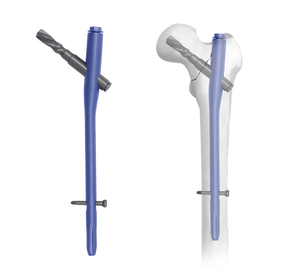
For standard catalog inventory (including volar plates, proximal tibia plates, distal fibula plates, and intramedullary nails), orders are processed and dispatched within 15 days from our factory. Shipments routed via express air freight to San Francisco International Airport (SFO) typically clear customs and arrive at local warehouses within 3 to 5 business days. Customized OEM/ODM private-label runs are scheduled individually based on design validation complexity.
Why is Titanium Grade 5 ELI preferred over 316L Stainless Steel for distal radius ORIF?
Titanium Ti-6Al-4V ELI (ASTM F136) offers significant clinical advantages over 316L Stainless Steel. Its elastic modulus (~110 GPa) is closer to human cortical bone (~18 GPa), reducing stress shielding at the fracture site and encouraging osteosynthesis. Additionally, titanium exhibits higher fatigue strength under cyclic loading, superior biocompatibility, lower magnetic susceptibility (reducing MRI artifacts), and zero risk of nickel-allergy sensitization in sensitive patient demographics.
Are sterilization tray sets and reusable surgical instruments supplied alongside the plate implants?
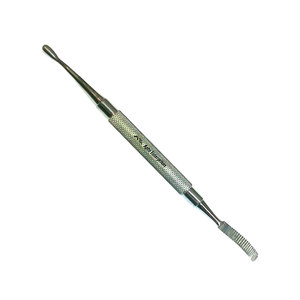
Yes. We manufacture complete trauma system sets that include anodized aluminum sterilization trays, ergonomic quick-coupling screwdrivers, drill bits, threaded drill guides, benders, depth gauges, and K-wire positioning instruments. Trays can be custom laser-etched with graphic layouts and part numbers for seamless operating room turnover in Bay Area Ambulatory Surgery Centers (ASCs).
What quality assurance measures guarantee zero thread stripping in variable-angle locking holes?
Our variable-angle polyaxial locking holes undergo multi-stage CNC thread milling followed by Type II anodization, which hardens the titanium surface. Each screw and plate combination is tested under static shear and dynamic torsional fatigue protocols (ASTM F382/F543). This ensures that when screws are driven at angles up to ±15°, the locking threads engage cleanly and cold-weld securely without metal galling, thread cross-stripping, or screw head back-out.
Partner With a Trusted Distal Radius Volar Plate Manufacturer
Whether you are expanding a medical device distribution brand in Northern California or seeking direct factory OEM contract manufacturing with reliable 15-day delivery lead times, Trauhui Medical delivers engineered excellence backed by full regulatory technical support.
Get a Quote