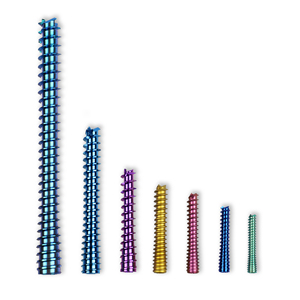
CANWELL Titanium Headless Cannulated Compression Screws Orthopedic Trauma Implant System CE Certified
Precision Grade 5 Titanium ELI cannulated screws engineered for minimally invasive scaphoid and intra-articular fracture fixation.
Engineered under rigorous ISO 13485:2016 quality protocols, CE marked, and optimized for orthopedic trauma, spinal reconstruction, and veterinary applications.
Precision Grade 5 Titanium ELI cannulated screws engineered for minimally invasive scaphoid and intra-articular fracture fixation.
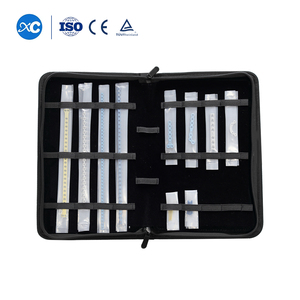
Class III certified veterinary stem and locking plate kit configured for comparative surgical and small animal orthopedic reconstruction.
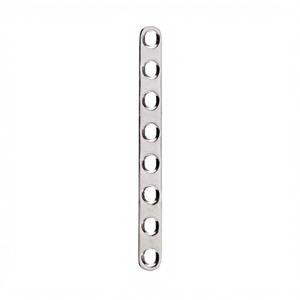
High-tensile 316LVM stainless steel trauma fixation plates designed for superior fatigue resistance and anatomical contouring.
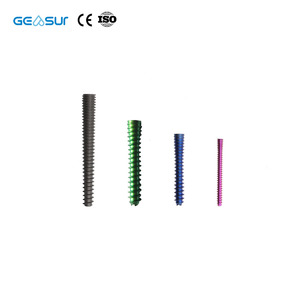
Class III bio-compatible titanium headless compression screws for osteotomy and periarticular trauma stabilization.
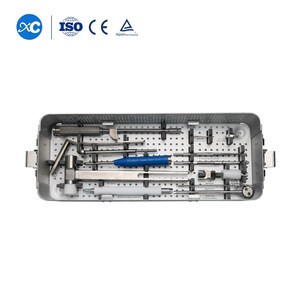
Complete hip arthroplasty instrument set featuring micro-polished titanium stems and modular acetabular cups (Sizes 1#-5#).
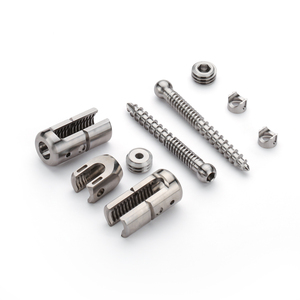
Top-loading pedicle screw and rod fixation system engineered for complex spinal trauma, scoliosis correction, and Pott's disease.
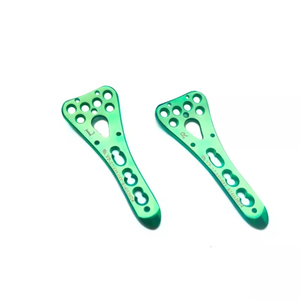
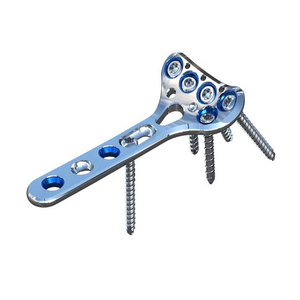
Anatomical distal radius volar locking plate allowing ±15° polyaxial screw trajectory for intra-articular fracture reduction.
Comprehensive orthopedic surgical instrument container set containing taps, drills, benders, and quick-coupling screwdrivers.
The Federal Democratic Republic of Ethiopia represents one of the fastest-growing healthcare sectors in Sub-Saharan Africa. With a population exceeding 120 million and an expanding infrastructure network, the demand for specialized orthopedic interventions—specifically trauma fixation, joint arthroplasty, and spinal stabilization—has experienced exponential growth over the past decade. However, supplying medical devices to the Ethiopian market demands more than standard manufacturing capacity; it requires an uncompromising Quality Management System (QMS) aligned with ISO 13485:2016 and rigorous regulatory clearance from the Ethiopian Food and Drug Authority (EFDA).
Trauma care in Ethiopia faces unique clinical burdens. Road traffic injuries (RTIs) along major freight corridors—such as the Addis Ababa to Djibouti economic highway and the Modjo-Hawassa expressway—generate high volumes of complex, high-energy open fractures. Furthermore, chronic pathology such as spinal tuberculosis (Pott’s disease) and degenerative joint conditions present surgeons at major teaching hospitals with demanding reconstructive challenges. To prevent device failure, aseptic loosening, and surgical site infections, orthopedic implants exported to Ethiopia must exhibit flawless metallurgical purity, strict dimensional tolerances, and verified sterile packaging capable of withstanding tropical transit conditions.
An authentic orthopedic Quality Management System is not merely a set of paper procedures; it is an integrated engineering architecture built directly into every machining pass, surface anodization cycle, and cleanroom packaging process. As a premier manufacturer and global exporter, Trauhui Medical operates under a total quality loop that governs the full lifecycle of spinal implants, intramedullary nails, and locking bone plates.
Every titanium alloy bar and stainless steel plate undergoes spectroscopic chemical analysis and microstructural evaluation. We source exclusively medical-grade Titanium Grade 5 ELI (Extra Low Interstitial) per ASTM F136, ensuring superior tensile strength (>860 MPa) and extended cyclic fatigue resistance needed for load-bearing lower limb implants.
Utilizing state-of-the-art Swiss-type multi-axis CNC machining centers, our factory maintains microscopic tolerances within ±0.005mm. Variable angle locking screw threads and complex pedicle screw pitch profiles are manufactured with consistent geometric precision to guarantee intraoperative mechanical interlock.
Titanium implants undergo controlled Type II electrochemical anodization to enhance surface hardness, eliminate fretting corrosion, and form a biopassive titanium dioxide (TiO2) layer. Stainless steel implants undergo chemical passivation per ASTM F86 standards to prevent iron contamination and post-implant oxidation.
Final washing via ultrasonic multi-stage purified water systems is followed by primary packaging inside an ISO Class 8 (Class 100,000) cleanroom environment. Microscopic particulate controls and endotoxin testing (Limulus Amebocyte Lysate assay < 21.5 EU/device) ensure absolute biological safety before gamma or EO sterilization.
Implant designs are validated under stringent ASTM testing standards. Spinal constructs undergo axial compression and torsional fatigue testing per ASTM F1717 (5 million cycles), while bone plates undergo 4-point bending fatigue analysis per ASTM F382 to prevent intra-body fatigue fracture.
Every single screw, plate, and nail is laser-etched with a unique Device Identifier (UDI), lot number, and QR code. Complete Device History Records (DHR) detailing raw material heat numbers, CNC operator logs, and inspection sheets are permanently archived for 15+ years.
Orthopedic surgical demands vary widely across Ethiopia's multi-tiered hospital network—from tertiary referral centers in Addis Ababa to regional clinical hubs in Oromia, Amhara, Sidama, and Tigray regions. Trauhui Medical configures its implant systems to match the real-world operational constraints and patient demographics of these Ethiopian clinical environments.
At major institutions like Tikur Anbessa Specialized Hospital (TASH) and St. Paul's Hospital Millennium Medical College, orthopedic trauma teams face massive caseloads of severe comminuted open fractures resulting from commercial transport accidents. Our Ramic Proximal Femoral Nail (TRT11) and Variable Angle Volar/Titanium Locking Plate Systems allow surgeons to achieve rigid internal fixation, facilitating early mobilization and reducing prolonged hospital bed occupancy.
Spinal tuberculosis with kyphotic collapse remains a major cause of neurological deficit in highland rural populations. In specialized neurosurgical and orthopedic spine units across Hawassa, Jimma, and Mekelle, our JZC Posterior Thoracolumbar Pedicle Screw System combined with PEEK and 3D-Printed Titanium Interbody Fusion Cages (TLIF/ACDF) provides robust anterior/posterior column stabilization, facilitating anterior debridement and deformity correction.
District and general hospitals in secondary cities (e.g., Bahir Dar, Gondar, Dire Dawa) require versatile, quick-to-apply fixators for damage control orthopedics in acute open fractures. Our Titan-Fix Circular & Modular External Fixation Systems offer rapid pin insertion and rigid stability, holding complex limb trauma securely prior to definitive soft tissue coverage or staged internal fixation.
With Ethiopia boasting Africa’s largest livestock population and a growing veterinary science network led by institutions like the Addis Ababa University College of Veterinary Medicine (Bishoftu), our specialized XC Medico Pet Orthopedic Implant System and Lovan Animal Plates provide durable, bio-compatible solutions for corrective canine and livestock bone surgeries.
Ethiopia’s healthcare landscape is undergoing structural transformation driven by the Ministry of Health’s Health Sector Transformation Plan II (HSTP-II) and the national surgical expansion blueprint (Savings Lives Through Surgery - SaLTS). Key macro trends shaping orthopedic implant procurement include:
The Ethiopian Food and Drug Authority (EFDA) has systematically upgraded medical device import regulations. Importers are now required to submit complete Technical Documentation Files (STED format), certified ISO 13485 quality management certificates, and proof of clinical equivalence. Trauhui Medical provides fully structured regulatory dossiers to local Ethiopian distributor partners, accelerating product registration timelines from years to months.
While legacy stainless steel non-locking plates dominated historical public tenders due to unit cost, Ethiopian orthopedic surgeons are rapidly mandating anatomical titanium locking compression plates (LCP). Titanium's lower modulus of elasticity reduces stress shielding, while locking technology provides vastly superior fixation in osteoporotic bone and complex periarticular fractures.
The rapid expansion of private tertiary hospitals and diagnostic hubs in Addis Ababa (such as Korean Hospital/MCM, Silk Road General Hospital, and Kadisco General Hospital) has opened high-value demand for advanced spinal motion preservation systems, cannulated headless compression screws, and 3D-printed titanium fusion cages.
To provide clinical and procurement teams with verifiable technical data, the table below outlines the mechanical properties and metallurgical compliance of Trauhui Medical’s primary implant material grades compared to standard commercial alternatives.
| Material Specification | Standard Compliance | Yield Strength (MPa) | Ultimate Tensile Strength (MPa) | Fatigue Limit (Cyclic Stress) | Biocompatibility Application |
|---|---|---|---|---|---|
| Titanium Grade 5 ELI (Ti-6Al-4V ELI) | ASTM F136 / ISO 5832-3 | ≥ 795 MPa | ≥ 860 MPa | > 450 MPa (10⁶ cycles) | Pedicle Screws, Intra-medullary Nails, Locking Plates |
| Surgical Stainless Steel (316LVM) | ASTM F138 / ISO 5832-1 | ≥ 690 MPa | ≥ 860 MPa | > 380 MPa (10⁶ cycles) | Dynamic Compression Plates, Manual Instrument Trays |
| PEEK Optima (Polyetheretherketone) | ASTM F2026 | ≥ 110 MPa | ≥ 170 MPa | High Flexural Fatigue | ACDF & TLIF Spinal Interbody Fusion Cages |
| Commercial Pure Titanium (CP Ti Grade 4) | ASTM F67 / ISO 5832-2 | ≥ 480 MPa | ≥ 550 MPa | > 260 MPa | CMF Cranial & Micro Plating Systems |
Additionally, our Quality Assurance department executes strict lot-by-lot verification checkpoints across all manufacturing phases:
| QMS Phase | Inspection Protocol | Equipment Utilized | Acceptance Criteria |
|---|---|---|---|
| Incoming Inspection (IQC) | Spectroscopy & Hardness Verification | Optical Emission Spectrometer, Rockwell Hardness Tester | 100% match with ASTM F136/F138 Mill Test Certificates |
| In-Process Control (IPQC) | Dimensional Thread & Pitch Geometry | High-Precision CMM, Optical Profile Projectors | Tolerance deviation within ±0.005mm limit |
| Cleanroom Validation (FQC) | Endotoxin & Particulate Micro-Assay | LAL Kinetic Chromogenic System, Particle Counter | < 21.5 EU/device endotoxin; ISO Class 8 air cleanroom |
| Sterilization Release | Bioburden & Dose Audit Validation | ISO 11137 / ISO 11135 Gamma & EO Validation | Sterility Assurance Level (SAL) 10⁻⁶ guaranteed |
Trauhui Medical Co., Ltd (founded in 2009 in Changzhou, China—the world-renowned hub of orthopedic device manufacturing) has built a globally recognized ecosystem for orthopedic device design, OEM supply, and export distribution. Operating with an investment of over RMB 200 million and supported by international strategic assets (including manufacturing facilities in Hungary and strategic operations in Hong Kong), we deliver unparalleled supply reliability to the Ethiopian market.
Our 30,000m² facility houses over 150 sets of advanced CNC machining centers, automated polishing lines, and coordinate measuring machines, providing an annual production capacity exceeding 350,000 sets.
Products carry CE certificates, FDA 510(k) clearances, and TÜV-certified ISO 13485 Quality Management System accreditation, satisfying all EFDA import compliance prerequisites.
By maintaining large buffers of finished implants and raw medical-grade titanium bars, regular system orders are dispatched within 15 days, mitigating inventory stock-out risks for hospital tenders.
Addressing the key operational, regulatory, and financial questions asked by Ethiopian medical importers and hospital tender committees.
We provide qualified Ethiopian distributors with complete technical dossiers prepared according to the GHTF/STED format required by the Ethiopian Food and Drug Authority (EFDA). This includes notarized ISO 13485 QMS certificates, CE Certificates of Conformity, Free Sale Certificates (FSC), detailed metallurgical test reports, sterilization validation files, and clinical evaluation summaries.
Maritime container transit through Djibouti Port and truck freight across the Afar desert exposure experience extreme heat (>40°C) and variable humidity. Trauhui Medical utilizes heavy-duty, double-walled corrugated export packaging lined with aluminum moisture-barrier vacuum foil and desiccants. Primary cleanroom blister packs are constructed from high-barrier Tyvek® material, preventing seal degradation or humidity ingress.
Yes. We fully understand the foreign exchange regulations governed by the National Bank of Ethiopia (NBE) and regularly accept Irrevocable Letters of Credit (LC at sight) from major Ethiopian commercial banks (e.g., Commercial Bank of Ethiopia - CBE, Awash Bank, Dashen Bank). We assist importers with proforma invoice structuring to ensure smooth NBE forex allocation approval.
Yes. Every implant system (including pedicle screws, intramedullary nails, and locking plates) is accompanied by dedicated, ergonomic surgical instrument containers manufactured from high-grade stainless steel and aluminum alloy. Instrument sets are fully autoclavable and engineered for intuitive intraoperative workflow.
Standard catalog implants and instrument sets are maintained in high stock levels and dispatched from our factory within 15 days of order confirmation. Air freight shipments to Addis Ababa Bole International Airport (ADD) typically take 3-5 days transit, while sea freight to Djibouti Port takes approximately 20-25 days.
Yes. Our dedicated R&D engineering team of 30+ specialists handles full OEM and ODM customization. We can laser-etch your company branding onto implants and instrument trays, customize box packaging, and tailor implant dimensions to specific regional clinical requirements under strict confidentiality agreements.