Featured Orthopedic Implant & Instrument Systems
High-precision spinal fixation hardware, specialized correction tools, trauma implants, and veterinary systems manufactured to ISO 13485 and ASTM quality standards.
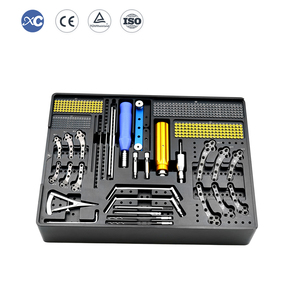
Veterinary Trauma Implants TPLO 2.7/3.5mm Locking Plate Instrument Set
Comprehensive TPLO surgical set engineered for precise tibial plateau leveling osteotomy with anatomical locking plates and drill guides.
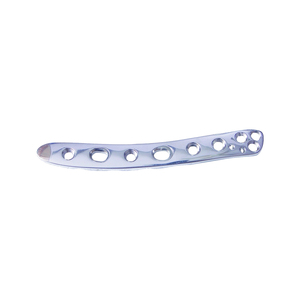
Stainless Steel Medical Orthopedic Implants & Fixation Hardware
CE and ISO certified lightweight surgical stainless steel implants designed for high mechanical strength, corrosion resistance, and customized OEM supply.
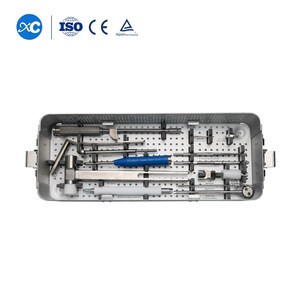
Veterinary Type Total Hip System & Surgical Instrument Tools (#1-#5)
Biocompatible total hip replacement implant set featuring ultra-high-molecular-weight polyethylene cups and modular titanium stems.
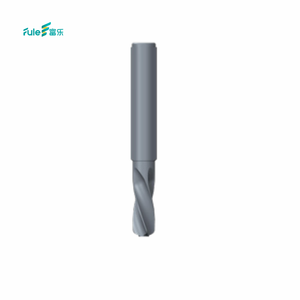
PFNA Femoral Intramedullary Nail Titanium Class III Implant System
Advanced proximal femoral nail antirotation system crafted from Ti-6Al-4V ELI for trochanteric and subtrochanteric fracture stabilization.
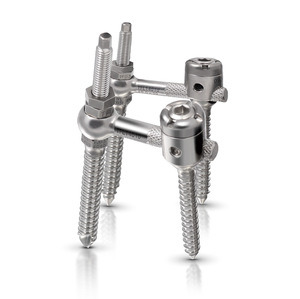
Titanium Posterior Spinal Traumatic System & Side-Opening Pedicle Screws
Polyaxial and monoaxial side-opening pedicle screw instrumentation offering dynamic rod persuader seating and high pull-out force for complex spinal correction.
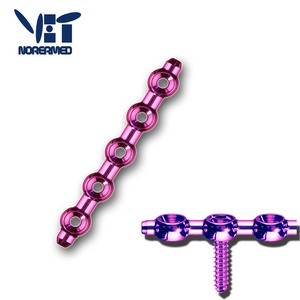
Veterinary Stainless Steel Locking SOP Plate Implant System
String-of-Pearls (SOP) locking plate system providing multi-planar contouring for complex small animal fragment surgery in canine and feline procedures.
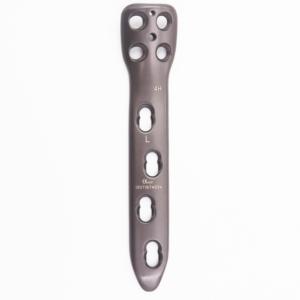
Titanium Distal Femur Medial Osteotomy Locking Plate System
Class III anatomical distal femur locking plate designed for open/closed wedge corrective osteotomies with combi-holes and variable angle locking screws.
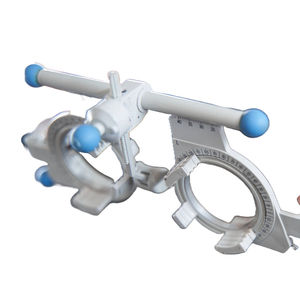
Contract Manufacturing for Clinical Device Hardware & Titanium Componentry
Full OEM/ODM contract manufacturing services utilizing 5-axis Swiss CNC machining, electrochemical anodization, and cleanroom sterile packaging.
Posterior Spinal Correction Instrumentation Architecture for Complex US Surgical Procedures
Posterior spinal deformity correction—encompassing surgery for Adolescent Idiopathic Scoliosis (AIS), Adult Spinal Deformity (ASD), kyphotic deformities, spondylolisthesis, and complex thoracolumbar trauma—demands surgical instruments capable of transferring substantial mechanical torque while maintaining delicate tactile control. In the United States medical device landscape, spine surgeons, healthcare purchasing networks (GPOs), and Ambulatory Surgical Centers (ASCs) evaluate posterior spinal correction instrument sets against rigorous benchmarks: mechanical endurance under ASTM F1717 dynamic fatigue testing, ergonomic handling during multi-level segmental derotation, intraoperative modular versatility, and flawless sterilization lifecycle performance.
As a premier contract manufacturer and exporter serving North American orthopedic distributors and private-label device companies, Trauhui Medical designs and manufactures posterior spinal correction instrument sets that seamlessly integrate pedicle screw fixation constructs, Cobalt-Chromium (CoCr) and Titanium alloy (Ti-6Al-4V ELI) rods (5.5mm and 6.0mm systems), and specialized reduction hardware.
1. Mechanical Principles & Force Distribution in Deformity Correction
Achieving rigid multi-segmental correction without compromising bone-screw interface integrity requires instruments engineered for managed mechanical leverage. Our posterior correction instrument platforms utilize a four-tier force distribution architecture:
- Direct Vertebral Derotation (DVD) Sleeves: Modular, interlocking derotation towers that snap securely over pedicle screw heads. These towers allow surgeons to apply synchronized 3D rotational forces across multiple segment levels simultaneously, minimizing stress concentration on individual pedicle walls.
- Mechanical Rod Persuaders & Pushers: High-gear reduction mechanisms capable of delivering up to 1.2 kN of controlled vertical force to seat 5.5mm or 6.0mm CoCr rods into deep polyaxial screw tulips, mitigating the risk of thread cross-threading or set-screw slippage.
- Translational & In-Situ French Rod Benders: Dual-pivot, smooth-radius bending pliers engineered to introduce precise lordotic or kyphotic contours into Grade 5 ELI titanium or CoCr rods without creating microscopic surface notches that act as stress risers.
- Calibrated Torque-Limiting Drivers: Preset drivers (typically 5.0 Nm to 12.0 Nm depending on set screw configuration) equipped with audible engagement clutches to ensure identical tightening torque across all locking caps, preventing post-operative construct loosening under cyclic physiological loads.
2. Material Science & Metallurgy Standards (ASTM F136 / ASTM F1586)
Precision in spinal correction hardware starts with raw material integrity. Trauhui Medical exclusively utilizes certified medical-grade alloys imported from qualified global supply chains:
- Titanium Alloy (Ti-6Al-4V ELI, ASTM F136): Selected for its superior biocompatibility, low elastic modulus (matching cortical bone closer than stainless steel), and high fatigue strength under dynamic bending tests. Ideal for long-segment construct flexibility and MRI artifact reduction.
- Cobalt-Chromium-Molybdenum Alloy (Co-Cr-Mo, ASTM F1537 / ISO 5832-12): Deployed in heavy-duty correction rods and rigid alignment tools where maximum flexural rigidity and torsional strength are required to maintain coronal plane correction in adult scoliosis.
- Custom Stainless Steels (Custom 455 / 17-4 PH Stainless Steel): Used in reusable surgical instrument handles, quick-connect shafts, and reduction ratchets to withstand repetitive thermal expansion cycles during steam autoclaving (134°C / 273°F) without dimensional distortion or corrosion.
Localized US Market Application Scenarios for Posterior Fixation Hardware
The United States spine surgery market operates under distinct surgical preferences, facility operational parameters, and regulatory oversight. Modern American spine practices emphasize reduced operating room (OR) time, standardized instrument tray ergonomics, and seamless transition between open traditional procedures and Minimally Invasive Surgery (MIS) approaches. Trauhui Medical’s posterior spinal correction systems are engineered specifically to meet these localized US clinical scenarios:
1. Adolescent Idiopathic Scoliosis (AIS) 3D Derotation
In major US pediatric orthopedic centers, multi-segmental pedicle screw constructs paired with direct vertebral body derotation (DVD) are the standard of care for rigid thoracic and lumbar curves (Lenke 1–6). Our instrument sets feature quick-coupling extension sleeves and segmental derotation handles that permit simultaneous transverse plane rotation and sagittal plane rod contouring, significantly improving 3D curve correction while preserving pulmonary function.
2. Adult Spinal Deformity (ASD) & Osteotomy Revision
Complex adult reconstructive surgeries involving Pedicle Subtraction Osteotomy (PSO) or Vertebral Column Resection (VCR) place extreme mechanical stress on spinal constructs. Trauhui Medical supplies heavy-duty reduction persuaders, cross-connector crimpers, and dual-rod attachment connectors that enable surgeons to assemble robust satellite rod constructs (tri-rod or quad-rod configurations), reducing rod fracture risk across osteotomy sites.
3. Ambulatory Surgical Center (ASC) Outpatient Procedures
The shift of 1- to 3-level lumbar fusion surgeries from inpatient hospital settings to US Ambulatory Surgical Centers (ASCs) demands lean, highly intuitive instrument trays. Trauhui Medical provides streamlined 2-tray posterior fixation instrument sets featuring color-coded, radiolucent handles and self-holding screwdrivers, shortening OR setup times, minimizing sterilization processing costs, and supporting rapid patient discharge.
Key Trends Driving US Spinal Instrumentation Sourcing & OEM Manufacturing
Understanding the macro-economic and clinical shifts within the US orthopedic healthcare market is essential for device distributors and OEM brands seeking sustainable competitive advantages. Procurement strategies in North America are rapidly evolving beyond simple unit-cost negotiations toward total-value partnership models:
A. Expansion of MIS Percutaneous & Tower-Based Systems
Minimally invasive spine surgery continues to capture market share across US medical centers due to reduced intraoperative blood loss and faster recovery times. Modern posterior correction platforms must accommodate percutaneous screw delivery via extended cannulated towers, target wire insertion, and blind rod insertion technique guides. Trauhui Medical’s R&D division has developed low-profile, drop-in rod slot persuaders compatible with fluoroscopic and 3D intraoperative navigation platforms.
B. Robotic Navigation & Image-Guided Surgery (IGS) Compatibility
The rapid adoption of robotic surgical assistants (e.g., Globus ExcelsiusGPS, Medtronic Mazor, Stryker Q Guidance) in American hospitals requires pedicle screw instruments built to ultra-tight machining tolerances. Instrument wobble or shaft deflection during robotic drilling and tap placement can introduce positional error. Trauhui Medical utilizes 5-axis CNC Swiss sliding-head machine tools to maintain tight concentricity tolerances (< 0.01 mm) on all cannulated drivers and navigation-tracked array adaptors.
C. Transition to Single-Use Sterile Kits & Value-Based Sourcing
Hospital-acquired infection (HAI) mitigation and sterile processing department (SPD) bottlenecks have accelerated demand for pre-sterilized, single-use instrument modules or hybrid procedure-ready kits. Trauhui Medical supports US OEM partners with ISO Class 8 (Class 100,000) cleanroom packaging solutions, gamma or ethylene oxide (EtO) sterilization validation, and custom blister tray design compliant with ISO 11607 packaging standards.
Enterprise Manufacturing Capability & Global Supply Infrastructure
Headquartered in Changzhou, Jiangsu Province—recognized globally as China’s premier orthopedic manufacturing hub—Trauhui Medical Co., Ltd. has dedicated over 15 years to advancing orthopedic implant and surgical instrument development. Backed by a total investment exceeding RMB 200 million and strategic global acquisitions (including production facilities in Hungary, Europe), Trauhui Medical serves as a reliable OEM/ODM partner for medical device brand owners across 30+ countries.
State-of-the-Art CNC Machinery
Equipped with over 150 sets of advanced manufacturing and inspection equipment, including 5-axis DMG MORI machining centers, Citizen Swiss CNC lathes, and Zeiss 3D coordinate measuring machines (CMM).
ISO 13485 QMS & FDA Regulatory Support
Operates under a TÜV Rheinland-certified ISO 13485 quality management system. Our regulatory team prepares Device Master Files (DMF) and comprehensive technical dossiers to accelerate US FDA 510(k) clearances.
In-House R&D & Rapid Prototyping
A dedicated R&D engineering team of 30+ specialists handles customized implant geometry, instrument handle ergonomics, surface anodization, and 3D titanium printing projects from concept to final product.
Frequently Asked Questions for US Distributors & OEM Partners
Key technical, regulatory, and commercial considerations addressed by Trauhui Medical’s international engineering and supply team.
What FDA 510(k) and ISO certifications do Trauhui Medical products hold for the US market?
Trauhui Medical products are manufactured under an ISO 13485:2016 audited quality management system. Major product lines hold CE marking and FDA 510(k) clearances. For OEM partners seeking custom private-label branding in the USA, we provide complete Device Master Files (DMF), mechanical test reports under ASTM F1717 / ASTM F543, material traceability certifications (ASTM F136 / ASTM F1537), and biocompatibility evaluation files according to ISO 10993 to streamline your 510(k) Premarket Notification submission.
Can Trauhui Medical custom-manufacture posterior spinal correction instruments according to our proprietary drawings?
Yes. We specialize in custom OEM/ODM contract manufacturing. Our engineering team conducts Design for Manufacturability (DFM) reviews on your 3D CAD files (STEP/IGES), recommends optimized CNC toolpathing, and produces functional prototypes within short lead times. We support custom handle colors (Type II titanium anodizing / silicone overmolding), laser etching for Unique Device Identification (UDI) compliance, and custom instrument container tray layouts.
What mechanical testing protocols are performed on your posterior spinal screw and rod systems?
Our spinal constructs undergo comprehensive biomechanical testing according to ASTM F1717 (Standard Test Methods for Spinal Implant Constructs in a Vertebrectomy Model). This includes Static Compression Bending, Static Torsion, and Dynamic Bending Fatigue Testing up to 5,000,000 cycles to determine runout fatigue limits. Pedicle screws are further tested under ASTM F543 for driving torque, axial pull-out strength, and set-screw torque retention.
What is the typical production lead time for bulk orders and OEM instrument tray fulfillment?
Standard inventory systems held in stock can be dispatched within 15 days of order confirmation. For custom OEM or contract manufacturing orders involving specialized machining, surface treatment, and custom tray assembly, standard lead times range from 30 to 45 days. We also offer vendor-managed inventory (VMI) and buffer stock programs for high-volume US distributors.
How does Trauhui Medical ensure batch-to-batch quality consistency and UDI traceability?
Every raw material lot undergoes spectroscopic chemical analysis and mechanical tensile verification prior to machining. During production, optical 2D comparators, CMMs, and digital torque meters verify critical dimensions at specified sampling intervals. Every finished implant and reusable instrument is laser-marked with a unique 21 CFR 801.20 compliant UDI barcode containing lot number, part number, and GTIN for 100% supply chain traceability.