Featured Orthopedic Systems & Volar Fixation Solutions
Explore our CE and ISO 13485 certified orthopedic trauma and spinal fixation implants available for hospital procurement and distribution partners across Egypt.
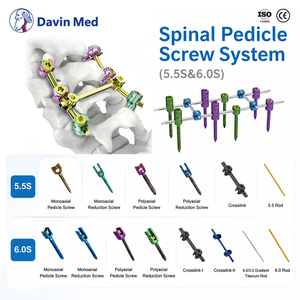
Davin Med Titanium Orthopedic Surgery Spinal 5.5/6.0mm Polyaxial Pedicle Screw Orthopedic Spine Screw Implants CE ISO
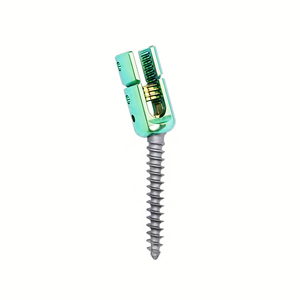
Original New 6.0 Polyaxial Reduction Spine Screw System Titanium Orthopedic Surgical Implants Fixation Pedicle Spinal Hospital
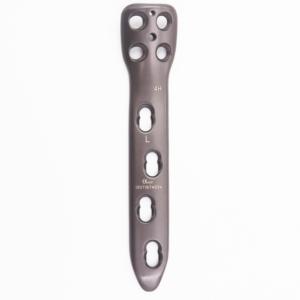
MEDICAL Factory Supply Titanium Distal Femur Medial Osteotomy Locking Plate CE/ISO/13485 Certified Class III Implant
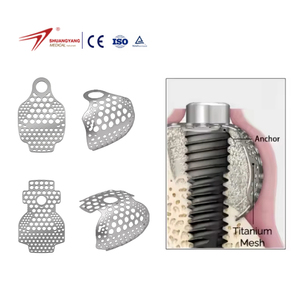
Dental Implant Titanium Mesh Guided Bone Regeneration Flexible Barrier Membrane Periodontal Reconstruction CE ISO Certified
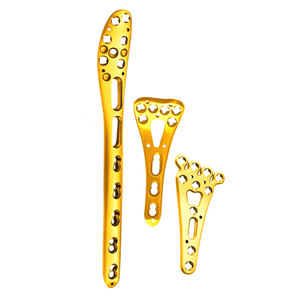
High Quality Stainless Steel Material Orthopedic Implants Premium Surgical Instrument For Bone Fixation Manual Instruments
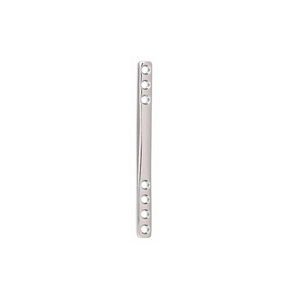
Competitive Price MEDICA Brand Orthopedic Implants Stainless Steel 2.0 Straight Hole Plate Type 4 Model AF00920 for Veterinary
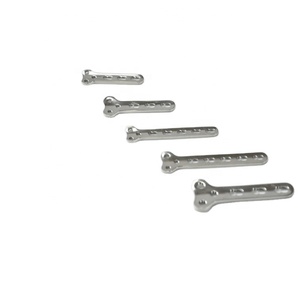
Veterinary Surgery Animal Orthopedic Implants 1.5mm T-Plate Orthopedic Plate and Screws Wholesale Factory Direct
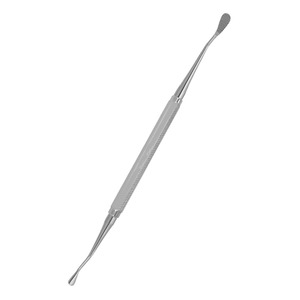
Manual Stainless Steel Bone File Miller Dental Instruments for Orthopedic Surgery Implantology Scraper High Quality CE Certified
1. Executive Summary: The Evolving Distal Radius Sourcing Landscape in Egypt
Distal radius fractures represent approximately 17.5% of all adult fractures managed in emergency trauma departments across Egypt. From major university hospitals in Cairo and Alexandria to regional trauma centers in Upper Egypt and the Nile Delta, open reduction and internal fixation (ORIF) utilizing anatomic distal radius volar locking plates has become the gold standard of treatment. Surgical preferences have rapidly transitioned away from Kirschner wires and external fixators toward low-profile anatomical volar locking compression plates (ALCP).
For medical device importers, hospital procurement officers, and orthopedic distributors serving the Egyptian market, identifying reliable, high-precision manufacturing partners is critical. Suppliers must demonstrate flawless biomechanical execution, robust fatigue strength, anatomical conformity to diverse patient profiles, and full regulatory compliance under the Egyptian Drug Authority (EDA). This industry white paper provides a comprehensive analysis of the top manufacturing standards, biomechanical considerations, local surgical trends, and direct OEM supply chain strategies for sourcing distal radius volar locking plates serving Egypt.
Clinical Insight: The volar approach for distal radius fixation minimizes dorsal soft tissue disruption and extensor tendon irritation. However, placing the plate proximal to the "watershed line" is crucial to prevent flexor pollicis longus (FPL) tendon rupture—a key design benchmark for modern volar locking plate manufacturers.
2. Biomechanical Engineering & Anatomical Design Standards
The human distal radius exhibits complex three-dimensional anatomy, featuring a palmar tilt averaging 11 degrees, a radial inclination averaging 23 degrees, and a distal radial height of approximately 12 mm. Manufacturing an effective volar locking plate requires advanced CNC machining capable of creating complex contours that match these anatomical parameters without inducing secondary soft tissue impinging.
2.1 Anatomical Contours & Watershed Line Compliance
Modern anatomical volar plates are contoured to sit snugly against the volar juxta-articular cortex of the distal radius. The critical design feature is the distal margin profile relative to the watershed line—the anatomical ridge marking the origin of the volar radiocarpal ligaments. Plates manufactured by top-tier suppliers feature smooth, chamfered distal edges and an anatomical taper to ensure the implant stays proximal to the watershed line, thereby significantly reducing the risk of flexor tendon wear and eventual rupture.
2.2 Variable Angle (Polyaxial) vs. Fixed Angle Locking Mechanisms
Implant manufacturers serving the Egyptian orthopedic market offer both monoaxial (fixed-angle) and polyaxial (variable-angle) locking mechanisms:
- Fixed-Angle Locking Systems: Utilize threaded screw holes that lock at a predetermined angle (typically subchondral support converging toward the radial styloid and ulnar corner). These systems offer construct stiffness but limited flexibility for complex, comminuted intra-articular fractures (AO/OTA 23-C types).
- Variable-Angle (Polyaxial) Locking Technology: Enables surgeons to direct 2.4mm locking screws within a 30-degree cone (±15° off-axis angle). This flexibility allows targeted fixation of specific articular fragments, such as the lunate facet or dorsal rim fragments, without compromising screw-to-plate locking integrity. Top factories utilize high-strength Grade 5 Titanium Alloy (Ti-6Al-4V ELI) or cobalt-chrome thread technology to ensure threads do not cross-thread during multi-angle insertion.
Biocompatible Ti-6Al-4V ELI
Medical-grade titanium alloy providing high fatigue strength, reduced elastic modulus matching bone, and zero cytotoxic artifacts.
Ultra-Low Profile (1.5 - 2.0mm)
Precision-milled anatomical thickness minimizes flexor tendon contact while retaining rigid subchondral support.
Multi-Screw Subchondral Pegs
Dual-row distal screw configurations form a raft structure beneath the articular surface to maintain reduction under load.
3. Technical Specifications & Comparison Matrix for Sourcing in Egypt
When selecting a factory supplier, Egyptian procurement executives must evaluate technical metrics across material grade, screw diameter compatibility, hole layout options, and surface treatments. Below is an engineering benchmark matrix comparing standard industry specifications for distal radius volar plates.
| Engineering Parameter | Standard Volar Locking Plate | Advanced Polyaxial Volar Plate | Extended Shaft Volar Plate |
|---|---|---|---|
| Raw Material Grade | Ti-6Al-4V / Stainless Steel 316L | Ti-6Al-4V ELI (ASTM F136) | Ti-6Al-4V ELI (ASTM F136) |
| Shaft Profile Thickness | 2.0 mm - 2.5 mm | 1.5 mm - 1.8 mm (Ultra-Low Profile) | 2.2 mm - 2.8 mm (Reinforcement) |
| Distal Screw Diameter | 2.7 mm Locking Screws | 2.4 mm Variable Angle Screws | 2.4 mm / 2.7 mm Hybrid Screws |
| Proximal Shaft Screws | 3.5 mm Cortex / Locking | 3.5 mm Cortical & Oblong Hole | 3.5 mm Systemic Locking Screws |
| Locking Trajectory Angle | Fixed (0° Trajectory) | ±15° Polyaxial Freedom | Fixed & Polyaxial Hybrid |
| Surface Treatment | Standard Anodization | Type II Hard Anodization / Color-Coded | Micro-Arc Oxidation / Color-Coded |
| Anatomical Options | Left / Right (2-4 Shaft Holes) | Left / Right (Narrow, Standard, Wide) | Left / Right (5-12 Shaft Holes) |
4. Evaluating the Top 10 Distal Radius Volar Plate Manufacturing Standards
Sourcing orthopedic implants requires looking beyond basic product catalogs. Importers supplying Egyptian healthcare institutions must verify that their manufacturing partner operates under internationally audited precision engineering practices. Below are the key evaluation criteria for selecting top factory suppliers serving Egypt:
- Swiss Multi-Axis CNC Milling Infrastructure: Distal radius plates feature compound curved geometries and intricate threaded holes. Leading manufacturers utilize 5-axis Citizen or Star Swiss CNC sliding headstock lathes and DMG Mori milling centers to guarantee dimensional tolerances within ±0.005mm.
- Raw Material Traceability & Certification: Titanium bars and sheets must originate from certified melt sources complying with ASTM F136 (Ti-6Al-4V ELI) or ASTM F138 (316L Stainless Steel). Mill test certificates (MTC) must accompany every raw material batch.
- Surface Anodization & Micro-Deburring: Sharp edges can cause flexor or extensor tendon friction. Top factories execute multi-stage automated deburring and Type II electrochemical anodization, improving surface fatigue life and offering color-coded sizing (e.g., green for right, blue for left).
- Cleanroom Washing & Packaging: Final washing in automated ultrasonic lines using deionized water (DI water), followed by primary packaging in ISO Class 7 cleanrooms, ensures bioburden control for sterile-ready distribution.
- Rigorous Biomechanical Fatigue Testing: Implants must pass static bending tests and dynamic fatigue loading tests according to ASTM F382 (Standard Specification and Test Method for Metallic Bone Plates).
- Complete Instrument Compatibility: A volar plate is only as good as its surgical instrument set. Factories must supply robust, heat-treated surgical stainless steel (17-4PH / 420 stainless) drivers, drill guides, depth gauges, and reduction forceps.
- Full FDA 510(k), CE & ISO 13485 Credentials: Essential for passing Egyptian Drug Authority (EDA) registration and winning Ministry of Health (MoH) public hospital tenders.
- OEM/ODM Customization Capability: The ability to modify plate length, screw head geometry, or packaging logos based on distributor branding requirements.
- Stable Supply Lead Times: Maintaining large safety stocks of standard plate sizes allows rapid order dispatch (within 15 days), mitigating supply chain delays at Egyptian ports.
- Post-Market Technical & Clinical Support: Providing comprehensive surgical technique guides, CAD models, and clinical documentation for Egyptian surgical workshops and distributor training.
5. Localized Application Scenarios Across Egyptian Healthcare Sectors
The clinical presentation of distal radius fractures in Egypt varies depending on demographic and geographic factors. Importers must tailor their inventory selection to match these specific local application scenarios:
5.1 High-Energy Urban Trauma in Cairo & Alexandria
Metropolitan cities like Cairo, Giza, and Alexandria experience high volumes of high-energy trauma caused by motor vehicle collisions and industrial work. These cases frequently involve comminuted intra-articular fractures (AO 23-C2 and C3) with metaphyseal bone loss. Surgeons in major institutions like Kasr Al-Ainy Hospital or Alexandria Main University Hospital demand wide-head, variable-angle volar locking plates equipped with multiple subchondral pegs to secure small distal articular fragments.
5.2 Geriatric Osteoporotic Fractures in Private & University Clinics
Egypt’s aging population has led to an increase in low-energy fragile fractures caused by simple falls from standing height (Colles' fractures). In osteoporotic bone, traditional non-locking cortical screws risk pulling out. Anatomic volar locking plates create a fixed-angle construct that acts as an internal fixator, preventing secondary loss of reduction, dorsal collapse, and radial shortening without requiring prolonged external immobilization.
5.3 Extended Shaft Fractures in Agricultural & Industrial Regions
In agricultural governorates across the Nile Delta and Upper Egypt (such as Asyut, Sohag, and Mansoura), trauma surgeons frequently encounter complex diaphyseal-metaphyseal fractures where distal radius fractures extend proximally into the radial shaft. Sourcing long-shaft volar locking plates (6 to 12 shaft holes) enables bridging fixation along the radial diaphysis while maintaining secure volar distal fixation.
6. Egyptian Medical Device Regulatory Landscape (EDA) & Market Trends
Navigating the Egyptian market requires a clear understanding of regulatory requirements and purchasing pathways:
6.1 Egyptian Drug Authority (EDA) Registration
All imported medical devices and Class IIb/Class III orthopedic implants must be registered with the Egyptian Drug Authority (EDA). The EDA requires comprehensive technical files, including CE Certificates under EU MDR 2017/745 or MDD 93/42/EEC, ISO 13485 QMS certification, Free Sale Certificates (FSC), biological evaluation reports (ISO 10993), and mechanical testing validation. Manufacturers with pre-established CE and ISO documentation streamline the registration timeline for Egyptian distributors.
6.2 Public Tenders (UHA / Unified Procurement Authority)
The Egyptian government’s Universal Health Insurance system (UHA) and central procurement initiatives centralized under the Authority for Unified Procurement (NUPP) aggregate medical device purchasing for public hospitals. Bidding requires competitive unit pricing, bulk delivery capabilities, and proved clinical durability—favoring direct factory partnerships over multi-tiered brokerage channels.
6.3 Minimally Invasive Plate Osteosynthesis (MIPO) Adoption
Egyptian hand and upper extremity surgeons are increasingly adopting MIPO techniques. By inserting the distal radius plate through a small distal incision beneath the pronator quadratus muscle, surgeons minimize periosteal stripping and preserve hematoma for faster bone healing. This technique relies heavily on low-profile, smooth-tapered plate tips designed specifically to slide sub-muscularly without tearing soft tissues.
7. Enterprise Strengths: Why Trauhui Medical is the Trusted OEM Partner
Founded in 2009 and strategically headquartered in Changzhou—the premier cluster of China's medical device manufacturing sector—Trauhui Medical Co., Ltd has established itself as an international leader in orthopedic implant development and manufacturing.
- Comprehensive Manufacturing Infrastructure: Operating a modern facility exceeding 30,000 square meters equipped with over 150 sets of advanced Swiss and Japanese multi-axis CNC machining centers, wire EDM, and automated surface finishing systems.
- Massive Annual Production Capacity: Supporting an annual output of over 350,000 pieces of implants and instruments, ensuring continuous inventory availability for high-volume public tenders in Egypt.
- Certified Quality Assurance System: Operating under a strict ISO 13485 quality management system, backed by international CE certification and FDA 510(k) clearances. Every batch is subjected to 100% optical and dimensional verification.
- Global Footprint & Export Experience: Exporting to over 30 countries across the Middle East, North Africa, Europe, and Latin America. We provide complete dossier support to expedite Egyptian EDA registration.
- Full OEM/ODM Private Labeling: From custom plate contour development to customized surgical tray layout design and private label packaging, our dedicated engineering team turns concepts into market-ready products.
8. Frequently Asked Questions (FAQ) for Egyptian Buyers
We provide full technical documentation dossiers required by the Egyptian Drug Authority (EDA), including certified copies of ISO 13485, CE Certificates, Free Sale Certificates (FSC) legalized by the Egyptian Embassy, ASTM raw material inspection reports, biocompatibility reports (ISO 10993), and mechanical test validation (ASTM F382).
We supply distal radius plates in both high-grade Titanium Alloy (Ti-6Al-4V ELI, ASTM F136) and Implant-Grade Stainless Steel (316L, ASTM F138). Titanium is widely preferred for private sector clinics due to higher fatigue resistance and MRI compatibility, while Stainless Steel offers an economical choice for volume-driven public sector contracts.
Standard system catalog items are kept in stock and ready to ship within 15 days. Shipments are regularly dispatched via air freight to Cairo International Airport (CAI) or sea freight to Alexandria, Port Said, or Sokhna ports, depending on your order volume and customs preference.
Yes. Our 2.4/2.7mm distal radius instrument kits are housed in autoclavable aluminum sterilization boxes. The sets include color-coded drill bits, quick-coupling torque-limiting screwdrivers, soft-tissue retractors, and bending pliers optimized for comfortable ergonomics during long surgical procedures.
Absolutely. We offer complete OEM/ODM solutions, including custom laser-marking of your company brand name and catalog numbers onto the plates and screws, customized box packaging, and tailored tray configurations.
Our distal radius volar plates feature an ultra-low profile design (1.5mm distal margin) with smooth, rounded chamfered distal edges. When placed anatomical proximal to the watershed line, the smooth surface contours prevent mechanical attrition of the flexor pollicis longus (FPL) tendon.
Partner with a Certified Orthopedic Implant Manufacturer
Expand your product portfolio in Egypt with world-class distal radius volar plates and surgical instrument sets. Contact our international business specialists today for factory-direct quotes, technical documentation, or sample requests.