Featured Orthopaedic Implants & Instrument Systems
Precision-engineered spine, trauma, and surgical instrumentation manufactured in compliance with ISO 13485 and CE standards for immediate deployment in New Zealand healthcare facilities.
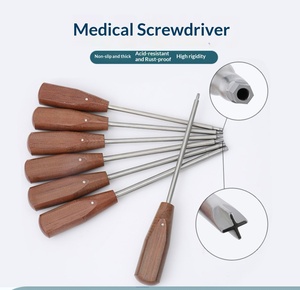
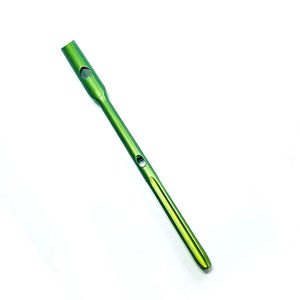
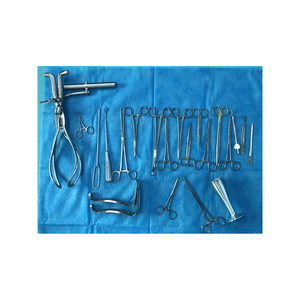
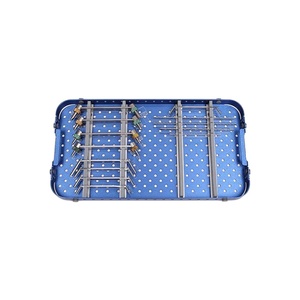
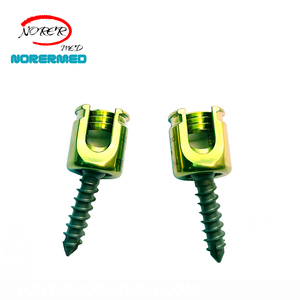
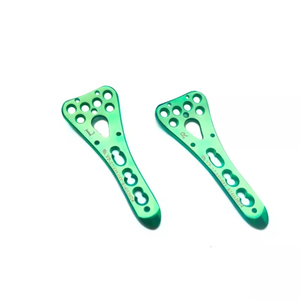
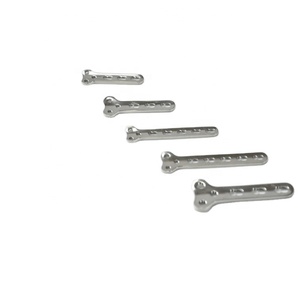
Transforaminal Lumbar Interbody Fusion (TLIF) Technology: The Sino-New Zealand Supply Dynamics
Transforaminal Lumbar Interbody Fusion (TLIF) has firmly established itself as the gold-standard surgical technique for treating degenerative disc disease (DDD), grade I/II spondylolisthesis, lumbar spinal stenosis, and spinal instability. By approaching the intervertebral disc space via a unilateral posterior transforaminal corridor, TLIF minimizes neural retraction, preserves contralateral posterior elements, and provides a direct route for anterior column support and sagittal lordosis restoration.
For New Zealand’s healthcare landscape—governed by both public health networks (Te Whatu Ora / Health New Zealand) and private hospital chains (such as Southern Cross Healthcare, Evolution Healthcare, and MercyAscot)—securing premium-grade, clinically reliable, and cost-effective spinal implants is a strategic imperative. As healthcare budgets face tighter fiscal scrutiny alongside growing surgical waiting lists, New Zealand medical device distributors and hospital procurement managers are increasingly turning to top-tier Chinese original equipment manufacturers (OEMs).
Information Gain Insight: China's Orthopaedic Manufacturing Revolution
China's medical device hub in Changzhou, Jiangsu Province, has evolved from low-cost contract machining into an advanced biomedical innovation cluster. Leading manufacturers like Trauhui Medical integrate Swiss-type 5-axis CNC machining, additive 3D titanium printing, laser surface etching, and cleanroom ISO Class 7 packaging. Combined with rigorous ISO 13485 QMS and CE/FDA certifications, Chinese TLIF cages now deliver equivalent or superior biomechanical performance compared to Western legacy brands, at a 35% to 50% landed cost advantage for New Zealand importers.
Biomechanical Engineering of Modern TLIF Interbody Cages
The primary clinical objectives of a TLIF cage are to immediately restore disc space height, reopen neural foramina, re-establish segmental lordosis (typically 4° to 12°), and promote long-term interbody bony fusion (arthrodesis). Achieving these outcomes requires a sophisticated synthesis of material science, structural geometry, and surface topography.
| Biomechanical Parameter | Radiolucent PEEK (Polyetheretherketone) | 3D Printed Porous Titanium (Ti-6Al-4V) | Clinical Advantage in TLIF Surgery |
|---|---|---|---|
| Modulus of Elasticity | ~3.6 GPa (Close to cortical bone ~18 GPa) | ~2.0–4.0 GPa (Engineered cellular lattice) | Mitigates stress shielding and significantly reduces implant subsidence into vertebral endplates. |
| Imaging Compatibility | Radiolucent; Zero MRI/CT artifact | Minimal scatter; visualizable lattice outline | Enables precise postoperative CT radiographical assessment of fusion bridging across bone graft window. |
| Osseointegration Mechanism | Biologically inert; relies on mechanical interlocking | Active osteoconductive cellular micro-pore lattice (400–600 µm) | 3D Titanium fosters direct bone in-growth and vascularization without bone graft micro-motion. |
| Primary Mechanical Stability | Machined aggressive directional ridges / teeth | High friction coefficient (μ > 0.95) surface topography | Prevents posterior cage migration or retropulsion into the spinal canal post-impaction. |
| Graft Cavity Volume | Maximized central hollow graft window | Internal porous channels plus central lumen | Provides substantial space for autologous local bone or synthetic bone graft substitute packing. |
Biomechanical Testing Standards (ASTM F2077 & ASTM F2267)
To satisfy international regulatory bodies and clinical audits in New Zealand, Chinese TLIF interbody fusion devices undergo exhaustive mechanical testing in accredited independent laboratories. Key validation testing protocols include:
- Static and Dynamic Axial Compression (ASTM F2077): Evaluates the ultimate compressive load and fatigue strength under cyclic loading (over 5 million cycles at 5 Hz), simulating physiological lumbar loads during walking and bending.
- Static and Dynamic Torsion & Shear (ASTM F2077): Quantifies resistance to rotational forces and anteroposterior shear forces exerted by physiological muscle contraction and spinal motion.
- Subsidence Evaluation (ASTM F2267): Measures the cage's propensity to penetrate polyurethane foam models mimicking osteoporotic or normal human vertebral body endplates.
New Zealand Clinical Scenarios & Healthcare Ecosystem Requirements
New Zealand presents a unique demographic and epidemiological profile for spinal pathology. The combination of an aging European demographic suffering from lumbar spinal stenosis, higher rates of degenerative disc disease among rural farming communities, and severe spinal trauma resulting from high-impact sports (such as rugby union, rugby league, and equestrian activities) creates a steady demand for spinal fusion solutions across the North and South Islands.
Public Healthcare Sector (Te Whatu Ora)
Health New Zealand places immense weight on procurement efficiency, supply continuity, and strict regulatory compliance. Supply partners must provide comprehensive batch traceability, sterilization validation, and competitive volume pricing to support public hospital surgical waiting list initiatives.
Private Surgical Networks & ACC
Private hospitals (Southern Cross, Evolution, MercyAscot) and cases funded via the Accident Compensation Corporation (ACC) require premium intraoperative versatility. Surgeons demand ergonomic, self-centering TLIF inserters, wide range of lordotic cages (0°, 4°, 8°, 12°), and radiolucent shadowless trial kits.
Minimally Invasive (MIS-TLIF) Adoption
With New Zealand orthopaedic and neurosurgical spine specialists rapidly adopting tubular retractor and percutaneous pedicle screw systems, bullet-nosed TLIF cages that insert smoothly through narrow channel corridors are essential to cut operative times and speed patient recovery.
Importing TLIF Implants from China to New Zealand: Medsafe & Supply Chain Logistics
Exporting high-risk Class IIb medical devices from China into New Zealand requires strict alignment with national regulatory frameworks and international quality management protocols.
Medsafe WAND Registration & Conformity
Under the New Zealand Medicines Act 1981 and Medicines Regulations, medical devices supplied in NZ must be notified on the WAND (Web Assisted Notification of Devices) database maintained by Medsafe. Importers must hold robust technical files demonstrating regulatory approval in recognized reference jurisdictions—specifically holding **CE Marking under EU MDR/MDD** or **US FDA 510(k)** clearance, backed by an **ISO 13485:2016** audited quality system.
China-NZ Free Trade Agreement (Upgrade Protocol)
The upgraded China-New Zealand Free Trade Agreement (FTA) grants preferential tariff treatment for orthopedic medical device exports. Importers in Auckland, Wellington, and Christchurch benefit from zero-duty tariff structures, streamlined customs clearing procedures, and expedited biosecurity processing when medical implants are packaged in cleanroom double-sterile Tyvek blisters.
Seamless Freight Lanes & Stock Holding Strategies
To combat global supply disruptions, premier Chinese manufacturers maintain direct air freight lines (via Shanghai Pudong or Guangzhou Baiyun to Auckland Airport - AKL) delivering stock orders within 5 to 7 business days. For bulk hospital replenishment, sea freight to Port of Auckland, Port of Tauranga, or Lyttelton Port offers cost-effective consignment delivery within 14 to 21 days.
Why New Zealand Distributors Choose Trauhui Medical as Their Primary Manufacturing Partner
Founded in 2009 in Changzhou—China's recognized capital for orthopedic device manufacturing—Trauhui Medical Co., Ltd. represents the pinnacle of Chinese surgical innovation and quality control. With an total investment exceeding RMB 200 million and products deployed across 30+ international markets, Trauhui Medical provides New Zealand medical distributors with unparalleled OEM, ODM, and direct brand support.
Self-Owned 30,000 m² Manufacturing Complex
Every TLIF cage, pedicle screw, and surgical driver is machined in our own state-of-the-art facilities, eliminating middleman markups and guaranteeing complete quality control from raw titanium/PEEK bar stock to final sterile packaging.
150+ Advanced CNC Machining Centers
Equipped with high-precision Swiss-type 5-axis lathe centers, automated EDM machines, electron beam 3D printers, and German Zeiss CMM inspection equipment, ensuring micron-level dimensional accuracy across complex cage geometries.
Certified ISO 13485, CE & FDA Quality Management
Full international regulatory compliance. Our complete product dossier, risk management files (ISO 14971), and clinical evaluation reports (CER) are fully prepared to support immediate Medsafe WAND registration for New Zealand distributors.
Frequently Asked Questions for New Zealand Importers
Expert answers addressing regulatory, technical, logistical, and commercial inquiries for medical device procurement officers in New Zealand.
How do Trauhui Medical TLIF cages comply with New Zealand Medsafe WAND requirements?
Trauhui Medical products hold full CE Mark certification (under EU MDD/MDR) and ISO 13485:2016 quality system approvals. New Zealand importers and distributors can directly utilize our CE technical documentation, ISO certificates, and risk assessment files to complete the Web Assisted Notification of Devices (WAND) registration mandatory under Medsafe guidelines before commercial distribution.
What materials are utilized in your TLIF interbody fusion cages?
We supply TLIF cages in two advanced medical-grade material configurations:
1. Medical PEEK (Invibio Optima LT1): Radiotranslucent polymer featuring an elasticity modulus close to human bone, integrated with radio-opaque tantalum markers for precise x-ray visualization.
2. 3D Printed Porous Titanium (Ti-6Al-4V ELI - ASTM F136): Additive-manufactured cages with a bio-mimetic cellular pore structure (400–600 µm, 65-75% porosity) designed to stimulate direct osteointegration and vascularization.
What is the standard lead time for surgical implant shipping to Auckland or Christchurch?
For standard stocking catalog items, orders are dispatched within 10 to 15 business days. Express air freight shipments via DHL/FedEx or direct commercial flights to Auckland International Airport (AKL) arrive within 5 to 7 days. Sea freight container consignments to Auckland, Tauranga, or Lyttelton ports typically take 14 to 21 days from port of departure.
Can Trauhui Medical provide OEM/ODM private label customization for NZ brands?
Yes. Our in-house R&D engineering team of 30+ specialists handles complete OEM and ODM customization. We offer custom laser marking (brand logos, lot numbers, QR codes), customized surgical instrument tray layouts, private-label box packaging, and modification of cage anatomical lordotic angles to meet unique clinical preferences.
Are instrument trial sets available for clinical evaluation by NZ orthopaedic surgeons?
We provide comprehensive trial kits and demo instrument sets for qualified New Zealand medical distributors and hospital networks. Contact our international sales department to arrange evaluation sets for hands-on workshop testing and surgeon review.
How do you ensure batch quality and fatigue resistance for spinal implants?
Every manufacturing lot undergoes 100% optical dimensional inspection and raw material spectral analysis. Our internal testing center executes static and dynamic mechanical fatigue tests per ASTM F2077 and ASTM F2267 standards, ensuring every cage batch withstands over 5 million dynamic loading cycles without structural failure.
Partner with China's Premier TLIF Implant Manufacturer
Expand your New Zealand medical device portfolio with certified, high-margin, biomechanically validated spinal fusion cages and trauma systems. Request technical dossiers, regulatory files, and factory-direct pricing today.