Featured Traceable Orthopedic Implant Systems
Precision-engineered surgical implants and companion manual instrumentation systems manufactured under strict ISO 13485 quality control with laser-etched GS1 DataMatrix UDI traceability for Moscow healthcare institutions.
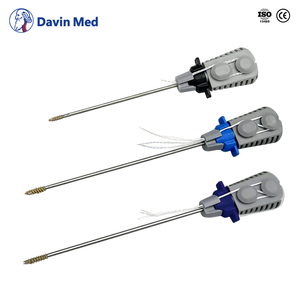
Davin Med Knotless PEEK Suture Anchor Orthopedic Implant for Shoulder Arthroscopy Rotator Cuff Repair Supplier
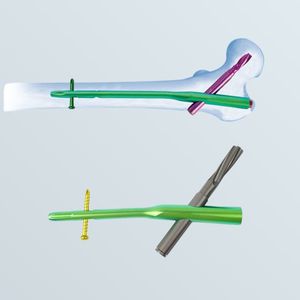
Premium Pfna Intramedullary Nail Wholesale Orthopedic Implant for Femur Intertrochanteric Bone Fracture
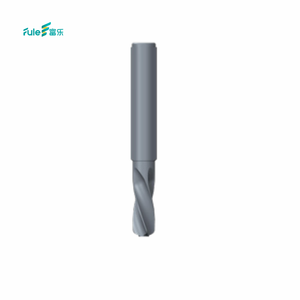
CE Marked China Manufacture PFNA Femoral Intramedullary Nail Orthopedic Implant Titanium OEM Fule Brand Class III 5-Year
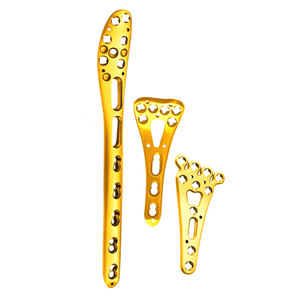
High Quality Stainless Steel Material Orthopedic Implants Premium Surgical Instrument For Bone Fixation Manual Instruments
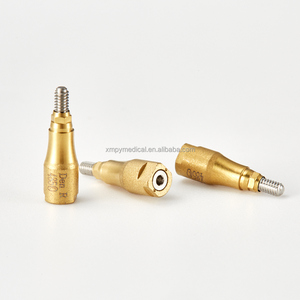
High Accuracy Implant Scan Body for Digital Workflow Compatible with Nobel Implant System Scan Post for Implant Restoration
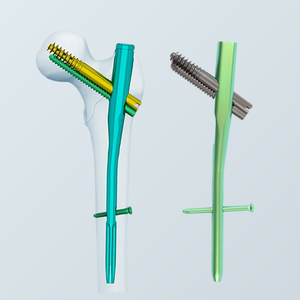
Titanium Intertan Interlocking Intramedullary Nail Implant for Orthopedic Fracture Trauma Treatment
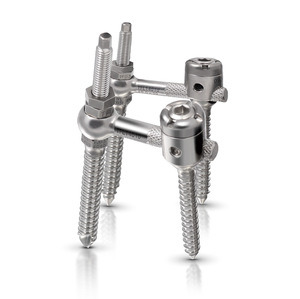
CE Marked Titanium Orthopedic Surgery Implants China Manufactured Spinal Traumatic System Side Opening Pedicle Interventional
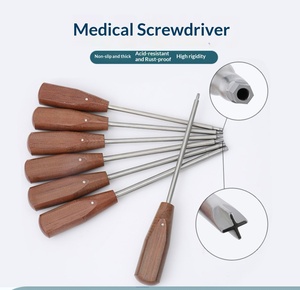
Orthopedic Devices Medical Screwdriver Flat-head Cross Plum Blossom Hexagon Hollow Diameter 2.5-3.5mm Class I
Navigating Orthopedic Implant Traceability & Manufacturing Excellence in Moscow
The clinical landscape across Moscow and the broader Central Federal District of Russia is experiencing a transformative shift in orthopedic device procurement. With high-volume surgical hubs such as the N.N. Priorov National Medical Research Center of Traumatology and Orthopedics, the Sklifosovsky Research Institute for Emergency Medicine, and the Botkin City Clinical Hospital operating at capacity, hospital procurement managers and distributors face rigorous mandates regarding product reliability, metallurgical purity, and comprehensive medical device traceability. Sourcing implant systems from verified orthopedic factories that maintain end-to-end trace mechanisms has evolved from a regulatory best practice into an absolute operational necessity.
Information Gain Insight: Russian medical device compliance under Roszdravnadzor (NMI / RZN registration protocols) and GOST R ISO 13485 standards demands strict batch traceability. Implants must feature Direct Part Marking (DPM) incorporating GS1 DataMatrix codes that remain legible across repeated autoclave sterilization cycles, ensuring full auditability from titanium ingot origin to operating room implantation.
Trauhui Medical stands at the forefront of modern orthopedic manufacturing, bridging advanced Chinese medical cluster engineering with international regulatory compliance. Headquartered in Changzhou—China’s premier orthopedic manufacturing zone—Trauhui Medical combines over 15 years of biomechanical research, proprietary invention patents, and automated CNC Swiss precision machining to deliver Class IIb and Class III orthopedic hardware engineered specifically for demanding clinical environments in Moscow.
Technical Architecture of Traceable Orthopedic Manufacturing
To maintain clinical safety and pass Moscow federal healthcare audits (under Federal Law No. 44-FZ and 223-FZ procurement criteria), orthopedic implants must embody strict material purity and traceable serialization. Our manufacturing infrastructure implements multi-tiered traceability protocols at every step of production:
Metallurgical Traceability
Every batch of raw titanium (Ti-6Al-4V ELI according to ASTM F136 / ISO 5832-3) and PEEK-OPTIMA polymer undergoes spectral analysis and ultrasonic flaw detection. Raw material lot certificates are permanently archived and linked to final component serial numbers.
Laser Direct Part Marking (DPM)
Utilizing nanosecond fiber laser systems, unique DataMatrix 2D codes, GTIN, Lot Numbers, and Expiration Dates are micro-etched directly onto the implant surface without compromising fatigue strength or surface passivity.
Cleanroom & Sterilization Packaging
Final washing, double-blister assembly, and vacuum pouch sealing occur inside ISO 14644-1 Class 8 Cleanrooms. Each box includes clear human-readable data alongside scannable UDI barcodes for hospital inventory management.
Clinical Deployment in Moscow Trauma & Reconstruction Centers
How Trauhui Medical's fully traceable orthopedic systems address specific surgical demands across Moscow’s specialized medical networks.
Femoral Intertrochanteric Fractures (PFNA & Intertan Systems)
During Moscow’s extended sub-zero winter months, emergency surgical admissions for slip-and-fall hip fractures rise sharply. Hospitals require immediate access to high-rigidity intramedullary proximal femoral nails. Trauhui Medical’s PFNA (TRT11) and Intertan Interlocking Nail systems feature helical blade fixation and anti-rotation locking mechanisms designed to prevent cut-out in osteoporotic bone. Full batch traceability allows emergency trauma departments to trace implant lots directly in their electronic health records (EHR).
Shoulder Arthroscopy & Rotator Cuff Repair (PEEK Knotless Anchors)
Leading Moscow sports traumatology clinics require radiolucent, non-metallic fixation for joint preservation. Our Davin Med Knotless PEEK Suture Anchors eliminate knot-tying steps, reducing operative theater duration. Manufactured from biocompatible PEEK-OPTIMA, these anchors present zero MR-imaging artifacts during postoperative evaluation, giving surgeons clear visualization of tissue healing.
Thoracolumbar Deformity & Fracture Stabilization (Pedicle Screw Systems)
For specialized neurosurgical centers performing spinal reconstruction, our Side-Opening Pedicle Screw Systems offer low-profile cannulated screw options compatible with minimally invasive surgery (MIS). The side-opening design simplifies rod insertion in tight anatomical corridors, while laser-etched pitch depth indicators grant surgeons tactile and visual feedback during transpedicular placement.
Guided Implant Reconstruction & CMF Plating
Modern Moscow dental and craniomaxillofacial surgery units rely on intraoral scanning and CAD/CAM prosthetics. Our High-Accuracy Scan Bodies deliver micron-level optical scan fidelity compatible with major digital libraries (e.g., Nobel Implant Systems). Coupled with Medtrix CMF titanium plating systems, reconstructive surgeons achieve precise anatomical contouring for cranial and mandibular trauma cases.
Key Sourcing Trends in the Moscow & Russian Federal District Orthopedic Market
Hospital procurement strategies across Moscow are evolving rapidly under changing global trade dynamics and updated national health policy mandates. Key industry trends driving manufacturer selection include:
- Direct-from-Factory OEM/ODM Procurement: Distributors and hospital groups in Moscow are increasingly establishing direct relationships with certified tier-1 manufacturers in Changzhou, bypassing excessive intermediary markups while retaining full control over technical specifications and private labeling.
- Stringent Audit Requirements for Roszdravnadzor Registration: Technical documentation, ISO 13485 QMS audit reports, biocompatibility testing (ISO 10993 series), and cleanroom sterilization validation must be fully accessible. Factory transparency is paramount for successful registration dossier submission.
- Demand for Integrated Surgical Tooling Trays: Procurement officers prefer suppliers offering complete clinical ecosystems—combining titanium implants with color-coded, ergonomic manual surgical instruments (screwdrivers, reamers, depth gauges, drill guides) packaged in durable, sterilizable aluminum trays.
- Agile Logistics & Buffer Stock Assurance: To mitigate international transport bottlenecks, trusted manufacturers must hold stock reserves for standard nails, plates, and cages, facilitating rapid dispatch via established air cargo routes into Sheremetyevo (SVO) or Vnukovo (VKO) logistics hubs.
Why Moscow Distributors & Hospitals Choose Trauhui Medical
Founded in 2009 with a total capital investment exceeding RMB 200 million, Trauhui Medical has established itself as an international benchmark in orthopedic manufacturing. Operating out of a state-of-the-art 30,000 square meter industrial complex in Changzhou Wujin Hi-Tech Zone, our facilities house over 150 sets of advanced high-precision Swiss-type turning centers, 5-axis CNC machining stations, and automated optical inspection equipment.
Proven International Certifications
Trauhui Medical products are certified with European CE Marking, US FDA 510(k) clearances, and operate under a TÜV-audited ISO 13485 Quality Management System. Complete technical files (STED) are available to facilitate Russian market regulatory registration.
Rapid 15-Day Delivery Cycle
We maintain extensive warehouse safety stock across our core trauma, spine, and arthroscopy lines. Regular distributor orders are typically processed and dispatched within 15 days, minimizing hospital stock-out risks.
Turnkey OEM / ODM & Private Label
Our 30+ engineer R&D team provides complete custom product development—from initial 3D CAD modeling, biomechanical FEA stress simulation, and rapid prototyping to private-label packaging and custom laser etching.
Frequently Asked Questions for Moscow Buyers
Q1: How does Trauhui Medical assist Moscow buyers with Roszdravnadzor (RZN) registration?
We provide complete regulatory dossier packages including ISO 13485 QMS certificates, CE mark technical files, material test reports (CoAs), mechanical fatigue test reports according to ASTM/ISO standards, and biocompatibility evaluation data under ISO 10993 to support your authorized Russian representative during registration.
Q2: Are the laser-etched UDI barcodes resistant to automated hospital washer-disinfectors and autoclaving?
Yes. Our fiber laser Direct Part Marking (DPM) technology etches GS1 DataMatrix codes deep into the titanium oxide layer without creating micro-cracks. Barcodes undergo rigorous passivation and pass validation testing for 100+ standard steam autoclave sterilization cycles (134°C) without code degradation.
Q3: What materials are used for Trauhui Medical trauma nails, locking plates, and spinal implants?
We exclusively utilize medical-grade Titanium Alloy (Ti-6Al-4V ELI / Grade 23 conforming to ASTM F136), pure titanium (Grades 2 and 4 conforming to ASTM F67), surgical Stainless Steel (316LVM conforming to ASTM F138), and PEEK-OPTIMA polymer for arthroscopy anchors and fusion cages.
Q4: What is the typical lead time for shipping standard orthopedic orders to Moscow?
For standard catalog items held in inventory, production and packing are completed within 7 to 15 business days. Transit time via direct air freight to Moscow Sheremetyevo (SVO) or overland multimodal logistics typically ranges between 7 to 12 days depending on customs processing.
Q5: Can Trauhui Medical supply custom surgical instrument kits labeled for Russian hospital tenders?
Yes. We offer fully customizable stainless steel surgical instrument trays, drivers, reamers, and bone holders. Trays can be laser-marked with Russian instrument names, catalog part numbers, and custom distributor branding.
Q6: How does your factory handle quality control during mass manufacturing?
Under our ISO 13485 QMS, every production batch undergoes 100% optical coordinate measurement machine (CMM) dimensional checking, surface roughness profiling, threads inspection, cleanroom particulate monitoring, and non-destructive surface crack detection prior to sterile blister packaging.
Partner with a Trusted Global Orthopedic Manufacturer
Looking for certified orthopedic implant supply, custom OEM development, or full UDI traceability dossiers for Moscow tenders? Contact our engineering and export team today to receive a complete product catalog and competitive factory quote.