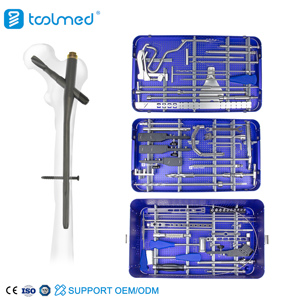
UDI Compliant Product Portfolio
Precision Orthopedic Implants & Surgical Instrument Sets
Manufactured under ISO 13485 and CE standards with high-contrast, non-destructive fiber-laser UDI DataMatrix markings for full tracking across South Korean healthcare networks.
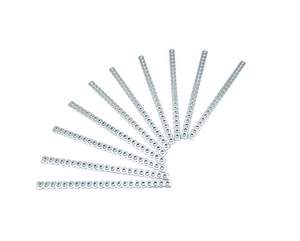
High Quality DCP Recon Orthopedic Implants 2.7mm Plate Set
Send an Inquiry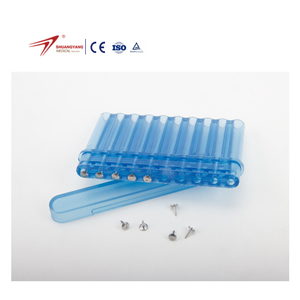
Shuangyang Titanium Alloy Screw GBR Membrane Bone Tack System
Send an Inquiry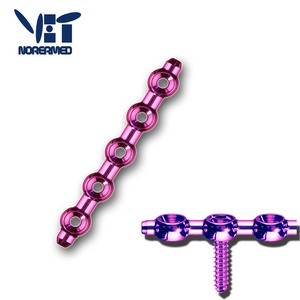
Veterinary Orthopedic Stainless Steel Locking SOP Plate System
Send an Inquiry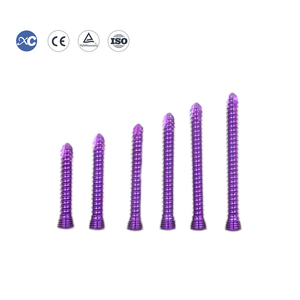
XC MEDICO Veterinary Orthopedic 2.7mm AO Locking Screw Implants
Send an Inquiry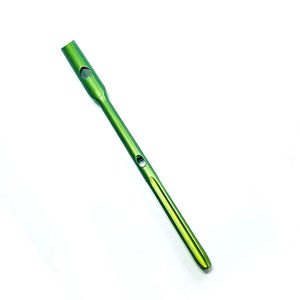
Antirotation Titanium Proximal Femoral Nail (PFNA) Implant Set
Send an Inquiry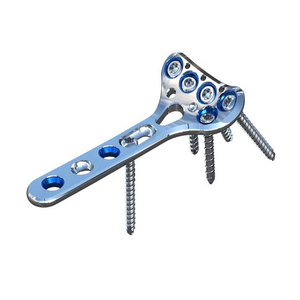
Medical Surgical Bone Kit & Orthopedic Spine Implant Systems
Send an Inquiry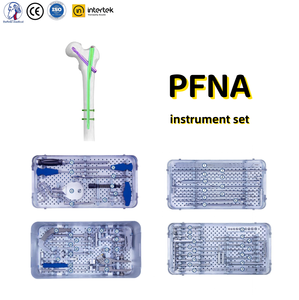
Titanium Intramedullary Interlocking PFNA Femur Nail System
Send an Inquiry
Technical Whitepaper & Metallurgical Insights
UDI Compliance & Precision Manufacturing for the Korean Market
How advanced laser annealing, GS1 DataMatrix encoding, and biocompatible metallurgy solve key regulatory and supply chain hurdles for South Korean orthopedic importers.
The South Korean medical device landscape, overseen by the Ministry of Food and Drug Safety (MFDS), has enacted stringent regulations regarding device traceability. Under the South Korean UDI (Unique Device Identification) system, all Class I through Class IV medical devices must feature a laser-etched, machine-readable GS1 DataMatrix code directly on the implant and its sterile barrier packaging. This requirement feeds data directly into the Medical Device Integrated Information System (NIDS / Integrated Information System for Medical Devices).
For South Korean distributors, hospital procurement boards (such as those representing tertiary medical centers in Seoul, Busan, and Daegu), and private-label OEM brands, procuring orthopedic hardware that strictly abides by these UDI standards is critical. Non-compliant markings risk automated scanning failures in operating theaters, delayed customs clearance, and non-compliance fines under the Korean Medical Devices Act.
Information Gain Key Takeaway: Trauhui Medical utilizes non-ablative, cold-picosecond and femtosecond fiber laser marking machines to etch high-density GS1 DataMatrix 2D codes onto Ti-6Al-4V ELI titanium alloy and 316LVM stainless steel implants. This technical approach guarantees complete code readability (ISO/IEC 15415 Grade A/B) after multi-cycle autoclave sterilization without removing surface material or compromising passive oxide layer corrosion resistance.
Corrosion-Safe UDI Marking
Thermal laser etching often degrades the protective TiO₂ passive layer of titanium implants, inducing localized pitting corrosion. Our cold laser technology preserves substrate integrity, validated by ASTM F1089 corrosion testing.
GS1 DataMatrix Precision
Every PFNA nail, locking plate, bone screw, and spinal cage features direct micro-structuring containing a UDI-DI (Device Identifier) and UDI-PI (Production Identifier: Lot, Expiry, Serial Number) seamless for NIDS scanning.
Biomechanically Validated
All internal fixator systems undergo rigorous mechanical testing (ASTM F1264 for intramedullary nails, ASTM F382 for bone plates, ASTM F2077 for interbody cages) to withstand extreme dynamic fatigue cycles.
Clinical Adaptation & Local Market Focus
Orthopedic Application Scenarios in South Korea
Engineered for high-volume trauma centers, specialized spine institutions, and rapidly growing veterinary clinical networks throughout Korea.
1. Geriatric Trauma & Hip Fracture Management
South Korea is transitioning into a super-aged society, driving an unprecedented demand for surgical intervention in intertrochanteric femoral fractures. Our Antirotation Titanium Proximal Femoral Nail (PFNA) systems and PFNA II Interlocking Nails provide immediate rotational stability for osteoporotic bone. The integrated UDI tracking allows emergency trauma suites across Gyeonggi and Seoul hospital networks to instantly match instrument sets with traceable implants, cutting perioperative prep time significantly.
2. Minimally Invasive Spine (MIS) Reconstructive Surgery
Korean spine surgeons are global pioneers in endoscopic and minimally invasive spinal procedures. Our complete spine portfolio—including 3D-printed porous titanium cages, TLIF, ACDF, and XLIF systems—incorporates low-profile design geometry with distinct UDI markings on non-contact zones. These devices ensure optimal osseointegration while giving hospital inventory management 100% real-time tracking from warehouse import to patient implantation record.
3. Maxillofacial & Dental Guided Bone Regeneration (GBR)
Reconstructive oral and maxillofacial surgeries demand tiny bone tacks and screws with immaculate precision. Our Titanium Alloy Screw GBR Membrane Bone Tack System utilizes ultra-fine micro-laser UDI marking technology on holding cassettes and individual component packages, guaranteeing compliance with MFDS dental implant standards while mitigating cross-contamination risks.
4. Advanced Veterinary Orthopedics (Companion Animal Hospitals)
The companion animal care sector in South Korea has seen explosive growth in major metropolitan areas such as Gangnam, Bundang, and Songdo. Our veterinary line—featuring DCP Recon Plates, 2.7mm AO Locking Screws, and Stainless Steel Locking SOP Plate Systems—brings human-grade ISO 13485 quality and direct laser UDI traceability to veterinary trauma centers specializing in canine TPLO and complex fracture fixations.
150+
CNC & Laser Equipment Sets
350,000+
Annual Unit Output
30+
Global Export Countries
100%
Korea MFDS UDI Alignment
Industry Outlook 2025–2030
South Korea Orthopedic & UDI Regulatory Trends
Understanding shifting procurement models, digital hospital integrations, and regulatory mandates reshaping Korean medical supply chains.
The South Korean medical device market is characterized by rapid digital integration, strict quality verification, and an increasing reliance on proven international OEM hubs to maintain competitive pricing under the National Health Insurance (NHI) reimbursement system. Key macroeconomic and regulatory trends include:
- Mandatory Electronic NIDS Reporting: The MFDS has phased in full enforcement of UDI supply chain reporting. Korean importers must log supply receipts and distribution details electronically into the Medical Device Information Portal. Having pre-coded, pre-validated GS1 DataMatrix tags directly from our factory eliminates costly secondary labeling processes in South Korea.
- Shift Toward Titanium Alloy (Ti-6Al-4V ELI): While 316LVM stainless steel remains prominent in trauma plates and veterinary setups, South Korean orthopedic surgeons increasingly favor Grade 5 ELI Titanium for permanent load-bearing implants due to superior biocompatibility, lower elastic modulus (closer to human cortical bone), and MRI compatibility.
- Consolidation of Private-Label OEM Procurement: Leading Korean medical device importers are scaling down domestic micro-factories in favor of strategic partnerships with large-scale, vertically integrated Chinese manufacturers capable of offering certified CE, FDA 510(k), and customized UDI packaging under an ISO 13485 quality system.
Manufacturing Excellence
Why Partner with Trauhui Medical Co., Ltd.
Over 15 years of dedicated focus on orthopedic device innovation, backed by a 30,000 m² state-of-the-art facility in Changzhou's high-tech zone.
Vertically Integrated Factory
From raw Ti-6Al-4V ELI titanium rods to 5-axis DMG Mori CNC machining, automated ultrasonic cleaning, cleanroom packaging, and UDI fiber-laser marking—every process is managed under one roof.
Full Regulatory Dossier Support
We supply Korean importers with complete Technical Files (STED format), ISO 13485:2016 audit documents, CE certificates, FDA 510(k) clearances, and biocompatibility test reports (ISO 10993) to accelerate MFDS registration.
Rapid 15-Day Delivery & Stocking
We hold large inventories of core trauma nail systems, locking plates, and spinal fusion kits. Standard orders deliver within 15 days, minimizing inventory stockout risks for South Korean distributors.
Procurement & Technical Clarifications
Frequently Asked Questions for Korean Importers
Addressing key inquiries from South Korean hospital purchasing agents, medical device distributors, and private-label OEM partners.
How does Trauhui Medical ensure UDI code readability aligns with South Korea MFDS & NIDS standards?
Our factory uses calibrated high-resolution fiber laser systems to etch 2D GS1 DataMatrix codes onto every individual implant and secondary sterile packaging. Every batch passes automated machine-vision verification under ISO/IEC 15415 standards, achieving Grade A or B barcode readability. We configure the UDI-DI and UDI-PI strings (including lot number, manufacture date, and serial number) to integrate smoothly with the South Korea Medical Device Information Portal (NIDS).
Can Trauhui Medical produce custom OEM orthopedic implants with localized private-label UDI packaging for Korea?
Yes. Our 30+ engineer R&D team works directly with Korean medical brands to customize implant geometries, surgical instrument tray layouts, and private-label sterile packaging. We apply customized brand logos and compliant UDI barcodes during primary packaging, providing a turn-key solution ready for immediate distribution in South Korea upon customs clearance.
Does laser UDI marking damage the surface passivation layer or cause corrosion on titanium nails and plates?
No. We employ picosecond cold-laser micro-structuring technology that induces a dark optical oxide layer change on Grade 5 titanium (Ti-6Al-4V ELI) without thermal micro-cracking or material removal. Subsequent chemical passivation following ASTM A967/A380 standards restores the uniform passive titanium oxide (TiO₂) film, passing rigorous ASTM F1089 corrosion resistance testing.
What quality certifications and technical documentation are available for Korean MFDS filing?
Trauhui Medical operates under a TÜV-audited ISO 13485:2016 Quality Management System. Our products carry European CE marks and US FDA 510(k) clearances. For South Korean MFDS approval, we supply full technical dossiers (STED), raw material certificates of analysis (Mill Test Certificates), mechanical testing reports, cleanroom validation, and ISO 10993 biocompatibility testing data.
What is the typical production lead time and order process for South Korean distributors?
For standard trauma nails, locking plates, spinal fusion cages, and veterinary instrument sets kept in stock, dispatch occurs within 15 days of order confirmation. Custom OEM/ODM orders or specialized bulk implant production typically require 30 to 45 days, depending on technical drawing approvals and packaging validation requirements.
How do Trauhui Medical implants withstand repeated hospital autoclave sterilization in South Korea?
Our raw materials—implant-grade Ti-6Al-4V ELI and 316LVM stainless steel—are specifically chosen for exceptional thermal stability and steam corrosion resistance. Both the physical implants and our laser-etched UDI DataMatrix markings undergo multi-cycle steam autoclave validation (134°C high-pressure steam) without fading, oxidation degradation, or code loss.
Partner with Korea's Trusted UDI Orthopedic Manufacturer
Access high-precision trauma, spine, CMF, and veterinary implant systems manufactured under strict ISO 13485 standards. Request technical catalogs, pricing schedules, or customized OEM validation dossiers today.